
Artemis Georgiou
Principal Investigator
Artemis Georgiou is Assistant Research Professor at the Archaeological Research Unit of the University of Cyprus. She completed her BA at the Department of History and Archaeology of the University of Cyprus and continued with Masters’ and Doctoral studies at the University of Oxford. She received a postdoctoral Marie Sklodowska Curie Career Integration Grant for the research project ‘ARIEL’, which was implemented at the University of Cyprus, between the years 2013-2017. In 2018-2020, she held a University of Cyprus Internal Research and Teaching fellowship, and during 2020-2021 she was the Edgar Peltenburg Postdoctoral Fellow for Cypriot Prehistory at the Cyprus American Archaeological Research Institute (CAARI). She participated in a number of archaeological fieldwork projects in Cyprus and Greece. In recent years, she has been collaborating with several missions for the study of pottery remains, such as the Palaepaphos Urban Landscape Project, the Kalavasos and Maroni Built Environment Project, the French Mission at Kition, the Lefkandi-Xeropolis project, the Archaeological Committee’s excavations at Mycenae and the Hazor Lower Acropolis project. Her research interests include the archaeology and history of Cyprus and the eastern Mediterranean in the 2nd and 1st millennia BC, the study of material culture, and Mediterranean interregional connectivity.

Maria Dikomitou-Eliadou
Maria Dikomitou Eliadou received her BA in History and Archaeology from the University of Cyprus, an MA in Mediterranean Archaeology by the University of Bristol and a second MA in Artefact Studies by University College London. She received her doctoral title by University College London. Her doctoral research focused on the compositional and technological characterisation of Early and Middle Bronze Age pottery from Cyprus. Since then, she has worked in a number of roles and projects at the Archaeological Research Unit of the University of Cyprus, including managing the MSCA-ITN "New Archaeological Research Network for Integrating Approaches to ancient material studies" (NARNIA, GA no. 265010). From 2018 to 2020, she held an MSCA-IF (ReCyPot, GA no. 747339) at the UCL, before returning to Cyprus as a member of the interdisciplinary research project “Bringing Life to Old Museum Collections: The Interdisciplinary Study of Pottery from the Cypriot Iron Age Polities of Salamis, Soloi, Lapithos and Chytroi” (MuseCo), hosted at the University of Cyprus. Maria has been involved in numerous interdisciplinary research projects, on ceramic artefacts (tableware, transport, storage and cooking pots, terracotta figurines) from different regions in Cyprus and the eastern Mediterranean, from prehistory to the High Middle Ages. Her research interests focus on ceramic technology and production, its differing modes of organisation, ceramic distribution, as well as technological and cultural change, and how these can be identified, recorded and explained by modern archaeology. In addition to her participation in the ComPAS research project as a postdoctoral researcher, she is also an Associate Research Scientist and the project manager of the European H2020 MSCA-ITN "Training the next generation of archaeological scientists: Interdisciplinary studies of pre-modern Plasters and Ceramics from the eastern Mediterranean" (PlaCe, GA no. 956410, https://place-itn.cyi.ac.cy).

Maria Choleva
Maria Choleva is an archaeologist specializing in Aegean prehistory, pottery techniques, and the anthropology of technology. Her research focuses on the materiality of craft knowledge, exploring the cultural appropriation and transmission of pottery making practices in prehistoric societies. She uses the innovation of the potter’s wheel in the Bronze Age Aegean as a case study. Her work adopts an anthropological approach to the study of pottery technology, emphasising the role of body techniques in shaping social roles and cultural knowledge. This approach combines archaeological analysis of ceramic assemblages, archaeomaterials studies and social theories of practice and embodiment. Maria holds a B.A. in Archaeology from the University of Athens, and a M.A in Prehistoric Archaeology and PhD in Archaeology, Ethnology and Prehistory from the University of Paris 1 Panthéon-Sorbonne. After receiving her PhD, she was a Fyssen Foundation postdoctoral fellow at the University of Louvain, where she worked on her project “A story of a ‘savoir-faire’. The transmission of the potter’s wheel and the emergence of new technological traditions in the Aegean during 3rd millennium”. In 2019-2020, she worked on the project “Tracing the materiality of social acts: learning and performing the potter’s wheel in Early Helladic mainland Greece” as a postdoctoral INSTAP fellow at the Fitch Laboratory of the British School Athens. In 2020, she was awarded a two-year postdoctoral fellowship from the State Scholarships Foundation of Greece and was affiliated with the University of Athens for her project “Changing traditions and social practices in a changing world: the innovation of the potter’s wheel in the Aegean during 2nd millennium”. Recently, she has been a research fellow at the Center for Hellenic Studies, Harvard University (2022-2023) and at the Research Center for Anatolian Civilizations (ANAMED), Koç University (2023-2024), where she has been working on her first monograph, provisionally entitled “Making an artisan for the potter’s wheel in the prehistoric Aegean: an anthropological interdisciplinary approach to artefacts”. In 2021, she also taught courses on the Bronze Age Aegean as a lecturer at the University of Thessaloniki. Maria has participated in various field and research projects in Greece and Turkey, and is co-editor of the biannual Greek humanities journal Krisi.

Anna Satraki
Dr Anna Satraki is an Archaeological Officer at the Department of Antiquities, Cyprus. She completed her BA in History and Archaeology at the University of Athens in 2001 and continued with postgraduate research. She completed her PhD thesis at the University of Cyprus in 2010 and her dissertation was published in 2012 as a monograph titled Cypriot Kings, From Kosmasos to Nikokreon (in Greek). She has participated in archaeological field projects in Cyprus and Greece and as an archaeological officer at the Department of Antiquities she directed excavations at Idalion, Larnaca, Pyla and others. Between 2018-2023 she was the Project Manager of the project ‘Management of cultural heritage as a means of local development’ for Idalion, funded in the frame of Interreg V-A Greece Cyprus 2014-2020. She was in charge of the renovation of the exhibition of the Archaeological Museum of Larnaca and is currently involved in the implementation of the museological study for the new Archaeological Museum of Cyprus.
Lindy Crewe
Dr Lindy Crewe graduated with a BA (Hons) degree from La Trobe University in Melbourne in 1997 and was awarded her PhD from the University of Edinburgh in 2004. She is the author of two monographs and over 30 articles. Her research has focussed on the prehistory of the eastern Mediterranean, primarily Cyprus. She is an expert on Bronze Age Cypriot pottery and the director of excavations at the Bronze Age settlement of Kissonerga-Skalia near Paphos. She has worked as Curator at the British Museum, as Lecturer in Archaeology at the University of Manchester and is currently the Director of the Cyprus American Archaeological Research Institute (CAARI) in Nicosia.
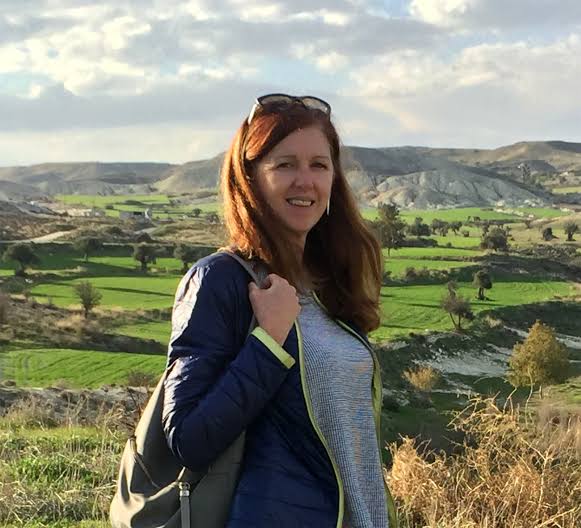
Evangelia Kiriatzi
Dr Evangelia Kiriatzi is the Director of the Fitch Laboratory of the British School at Athens. Her research focuses on the study of technology in pre-industrial societies, with emphasis on ceramics and the study of technological landscapes, though the integrated application of scientific techniques (ceramic petrology, elemental analysis, scanning electron microscopy). The focus of her research has been associated with three large-scale diachronic and collaborative projects in central coastal Macedonia, Aegina and Kythera. More recently, Dr Kiriatzi has been involved in research in western Anatolia, central Italy, the Iberian peninsula and the British Isles. As the Fitch Laboratory Director, she has put a lot of emphasis on developing the infrastructure and capacities of the laboratory for undertaking new research initiatives in areas beyond the Aegean, for expanding its collaboration networks beyond the UK and Greece, and for carrying out training programmes, for postgraduate students and young scholars from around the world.
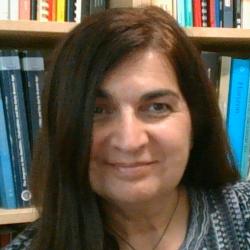
Noémi Müller
Dr Noémi Müller is a Scientific Research Officer, responsible for the chemical analysis unit at the Fitch Laboratory. This includes the development of analytical protocols for the WD-XRF, ensuring the implementation of elemental analyses in the laboratory’s projects and collaboration in the integration of the analytical data with the results of petrographic, archaeological, ethnographic, and experimental data. Noémi is interested in applying analytical methods to investigate inorganic archaeological artefacts and materials, focusing on the study of provenance and technology and with a special interest in archaeological ceramics. Her research also examines the affordance of utilitarian ceramics, using material testing to explore the influence of technological choices in manufacture.
George Papasavvas
Professor George Papasavvas has been teaching Classical Archaeology at the University of Cyprus since 2000. In 2013 he was appointed Head of the Department of History and Archaeology of the UCY. He has been awarded Professorship in 2023 and has been coordinating the Postgraduate Studies Programme of the Department of History and Archaeology and the archaeological classes of the School of Tour Guides of the Cyprus Tourist Organization for several years. He has solid expertise in project management and collaborative coordination. He studied at the University of Ioannina, Greece, Department of Prehistoric and Classical Archaeology, where he received his Bachelor degree in 1989. He continued his post-graduate studies in Germany, at Julius-Maximilians Universität Würzburg, Institut für Archäologie, during 1991-1995, and in 1997 he submitted his PhD thesis at the University of Athens, entitled “Bronze Stands in Cyprus and the Aegean. Rod Tripods and Four –Sided Stands from the Late Bronze Age to the Early Iron Age”. His research is focused on ancient technology, study of pottery, and specifically the study bronze artefacts in the eastern Mediterranean and their relation to cultic and funerary contexts. He has taken part in a number of field and analytical projects regarding his fields of expertise in ceramic analysis and mainly in the archaeometallurgy. He has an extensive list of publications which include books and three co-authored edited volumes and over thirty articles in peer reviewed journals, edited volumes and conference proceedings.
Last Updated on June 27, 2025