
Archaeological Investigations at Palaepaphos 2010
Excavations at Arkallon
The 2010 excavation season was initiated at the locality of Arkallon, on the southwestern slope of the Hadjiabdullah plateau, towards the coast. Arkallon is situated east of the sanctuary and immediately to the north of Teratsoudhia, where significant tomb groups of the Late Bronze Age were excavated by the Department of Antiquities. Early investigations at Arkallon exposed the royal tomb known as Spilaion tis Regainas, where inscriptions were found with the names of two fourth century kings of Paphos, Echetimos and Timocharis. A second tomb with a built dromos, disturbed by a bulldozer, lies 50 metres to the east.
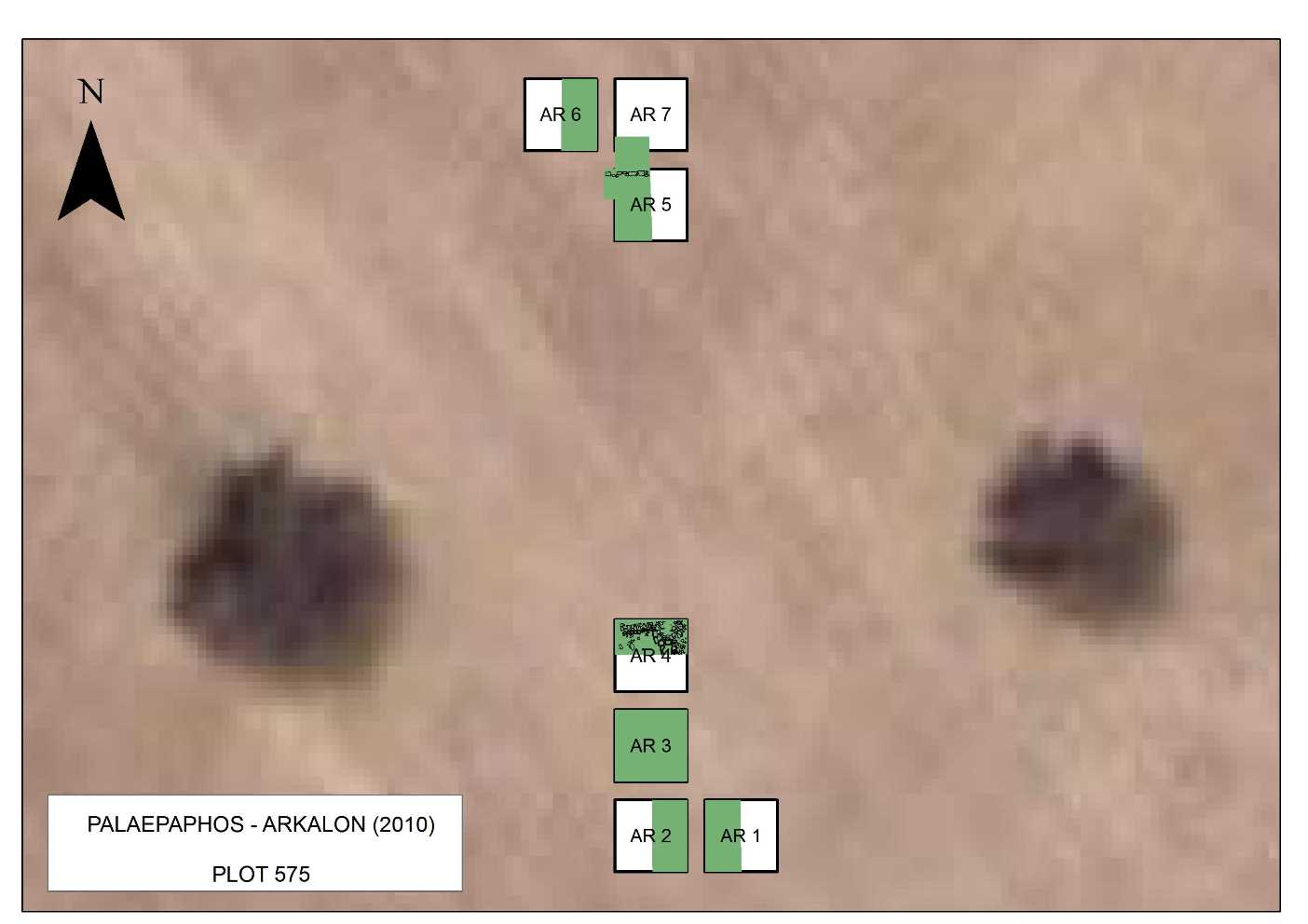
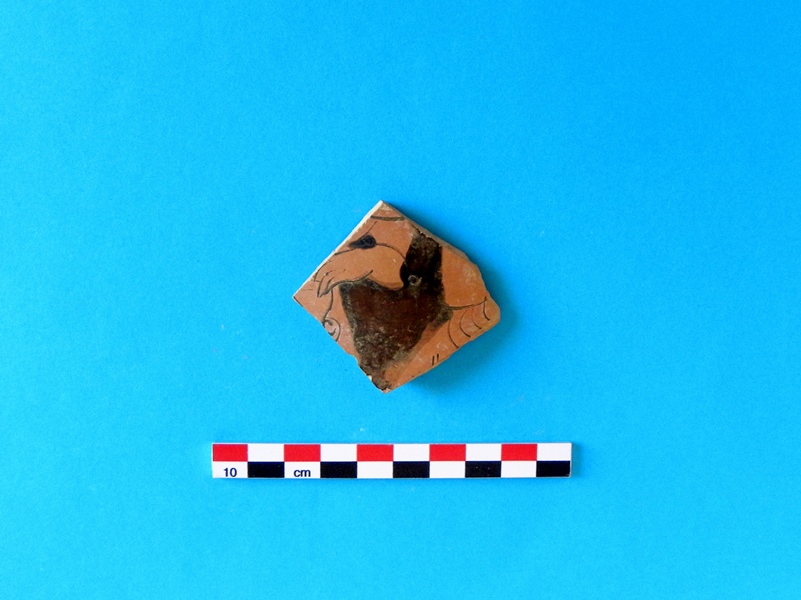
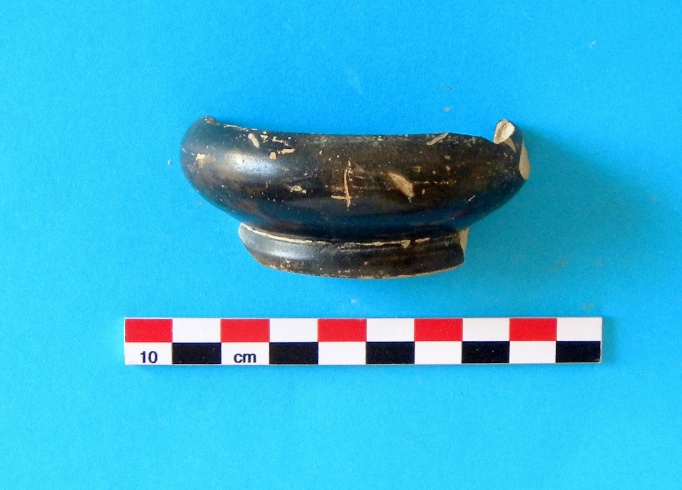
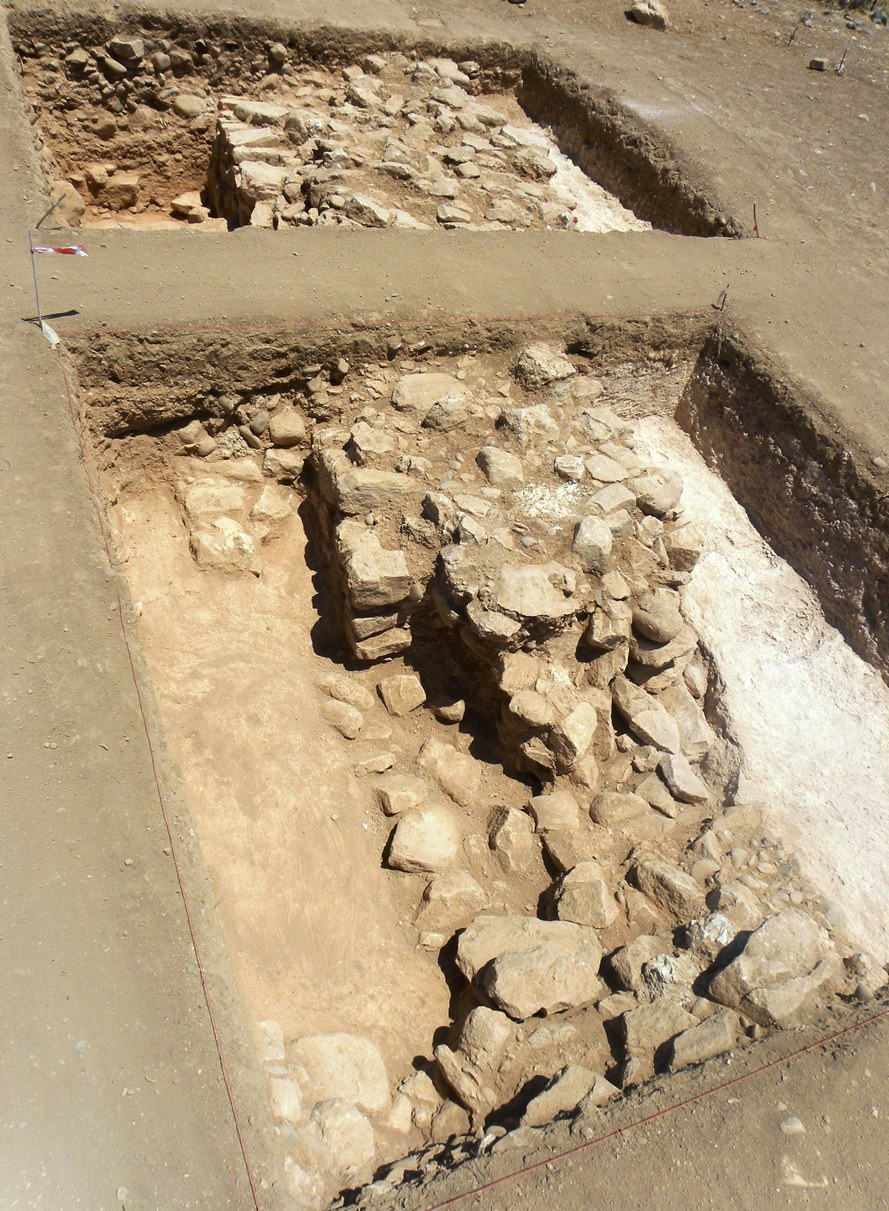
The 2010 excavations at Arkallon focused on the west side of the locality. We proceeded with the excavation of seven trenches (AR1-AR7) within plot 575. There was limited architectural evidence unearthed from these trenches, mostly from AR4 which revealed a large wall running on an east-west orientation, adjoining a vertical wall on a north-south axis with a small projection to the west. The soil contained large limestone slabs. Trench AR1 did not contain significant evidence of architectural structures, but there was a large accumulation of pottery, mostly of finewares, dating to the Late Classical-Hellenistic periods. The corpus included large numbers of imported Attic Black Glazed and Red-figured vessels. AR1 also contained three triton shells, which are associated with the cult of the Great Goddess.
Following the 2010 expedition at Arkallon, it appears that the site had never been used before the end of the Classical period – a time when the kingdom's administration was moving to Nea Paphos – but even then it did not become an elite neighbourhood. Considering its location between sanctuary and palace, the exclusion of Arkalon from the urban structure of the capital confirms how during the Late Bronze Age the area between clusters had not developed into a unified urban fabric.

Excavations at Hadjiabdullah
Following the short investigation at Arkallon, we continued with the excavation of Hadjiabdullah, resuming the work initiated in 2009. The 2010 fieldwork continued investigating Area 1, where during the 2009 expedition we exposed part of the main 3-meter-wide wall protecting the Hadjiabdullah acropolis. The focus of the 2010 expedition in Area 1 was the northwest corner at the edge of the terrace. Excavating on a vertical axis, we exposed four layers of well preserved stonework. A foundation trench was also revealed. Our investigations in the northern part of the rampart produced a number of Cypro-Classical and Hellenistic pottery, as well as figurines.
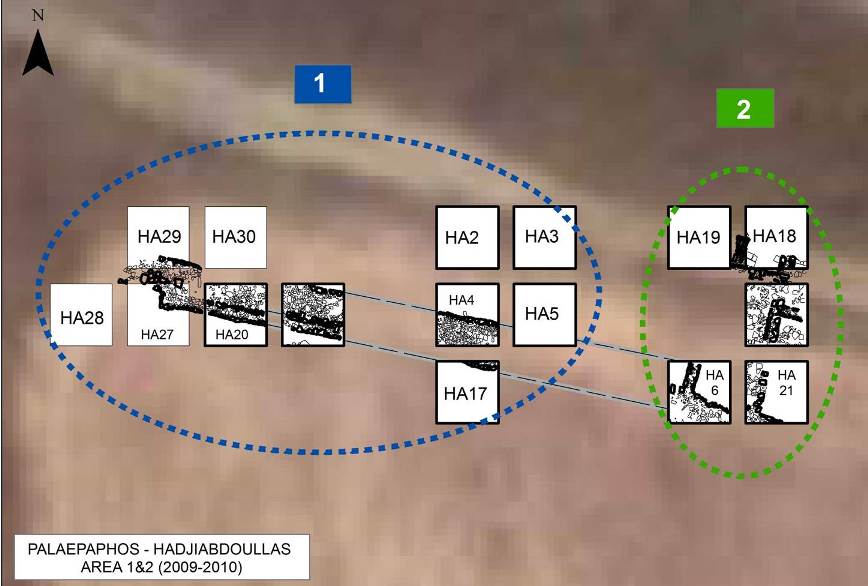
It was impossible to resume excavations in Area 2, where in 2009 we expose an impressive part of the curtain wall of the citadel on the edge of the cliff, because bulldozers and heavy agricultural machinery continued to use this narrow dirt road, causing further deterioration and erosion to the monument.
In Area 3, situated directly to the south of the monumental palatial complex excavated by the British Mission in the 1950s, four new trenches were opened in 2010. Excavations in Area 3 revealed a badly disturbed two-meter wide wall, running on a north-south axis, protecting the east side of the palace. The ancient landscape in this area was uneven, sloping from east to west. In order to rectify this, the ancient builders superimposed the inner side of the wall with four layers of stones, and the higher external side was founded into a cut part of the soft chalky bedrock on the east. Some very serious levelling operations must have taken place in recent years, which is why the soft limestone bedrock is found below less than 20cm. of plough soil. A semi-circular wall was exposed to the west of the two-meter-wide wall in trench HA 23. The function and purpose of this peculiar structure remain unclear.
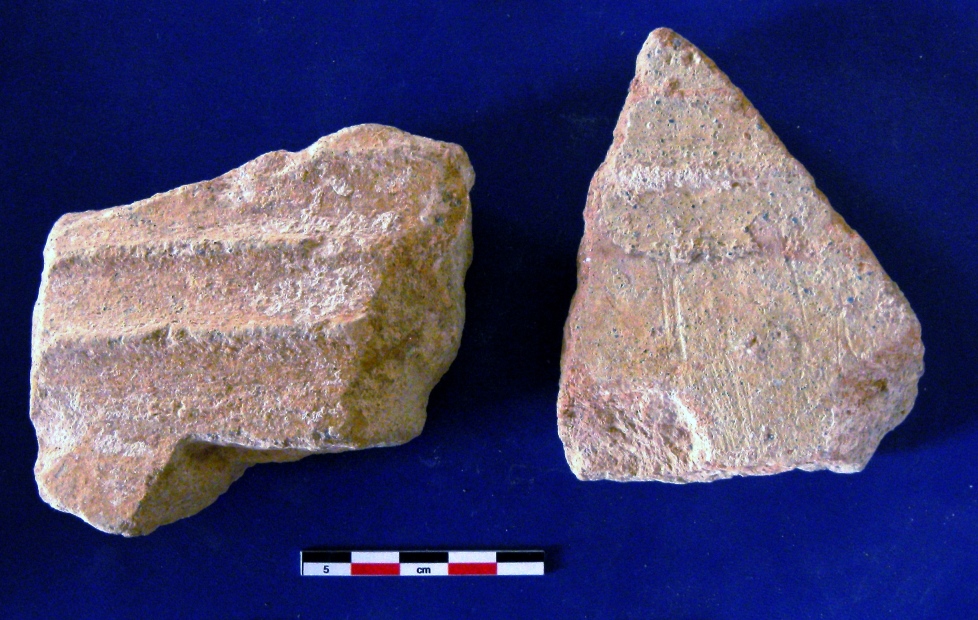
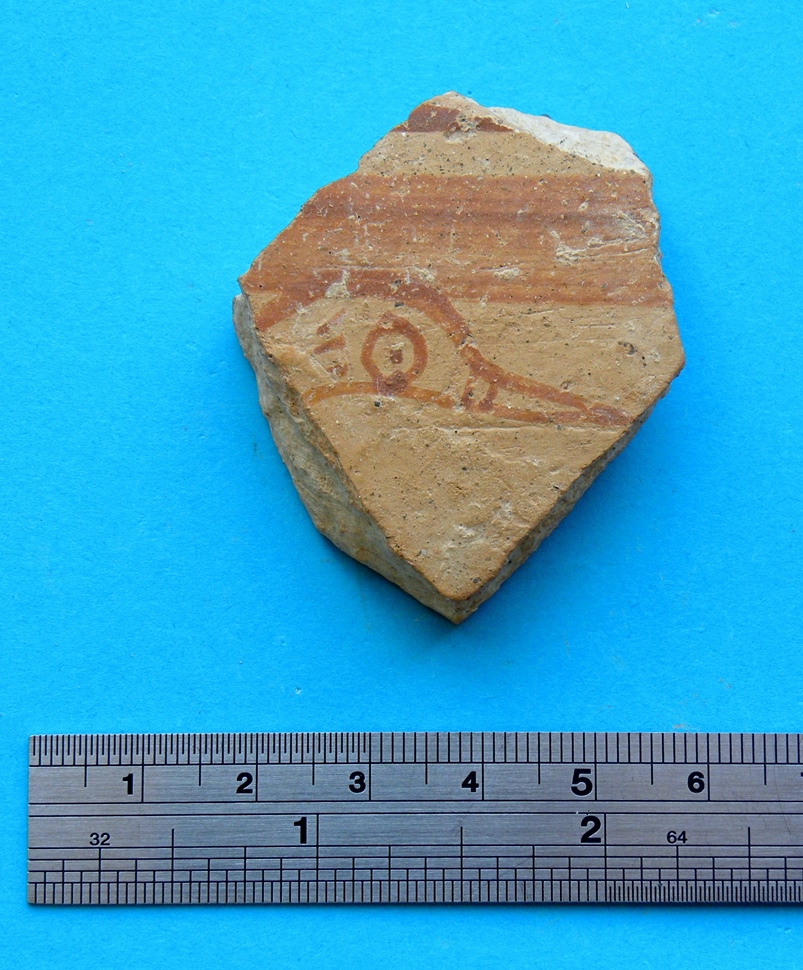
Area 3 also produced a large amount of Late Cypriot ceramics. The corpus of LBA pottery from this area includes large numbers of finewares (mostly White Slip, Base-ring and White Painted Wheelmade III wares), as well as Plain White wares and large pithos fragments. The 2010 excavations revealed a large fragment of a closed vessel in White Painted Wheelmade III ware depicting a bird and a fragmentary clay 'bathtub'. Based on the plethora of LBA ceramics, in terms of both finewares but also utilitarian and large storage vessels, the top terrace of Hadjiabdoulla was for the first time firmly established on the list of the Late Cypriot site clusters.


Τeam 2010
Maria Iacovou Anna Satraki Artemis Georgiou Stella Diakou Athos Agapiou Anna Georgiadou Paraskeva Charalambos Georgia-Marina Andreou Eleftheria Eleftheriou Eleni Athanasiou Alexandra Constantinou Pantelitsa Mylona Maria Vrachou Alexandros Nicolaou Savvas Lambrou Andri Nicolaou Andriani Hadjigeorgiou Panagiota Erotokritou Nasia Makarouna Anastasia Laou Christina Eliadou TheognosiaHadjieftichiou Ivi Michael Savvas Stavrou Tonia Mantzoura Vasiliki Charalambous Katerina Savva | Director, Professor in Prehistoric and Protohistoric Archaeology, University of Cyprus Assistant Director, PhD Candidate, University of Cyprus D.Phil Candidate, University of Oxford PhD Candidate, Bryn Mawr College Topographer, PhD Candidate, University of Cyprus PhD Candidate, Aix en Provence University Master Student, University of Edinburgh Master Student, University of Edinburgh Undergraduate Student, University of Cyprus Undergraduate Student, University of Cyprus Undergraduate Student, University of Cyprus Undergraduate Student, University of Cyprus Undergraduate Student, University of Cyprus Undergraduate Student, University of Cyprus Undergraduate Student, University of Cyprus Undergraduate Student, University of Cyprus Undergraduate Student, University of Cyprus Undergraduate Student, University of Cyprus Undergraduate Student, University of Cyprus Undergraduate Student, University of Cyprus Undergraduate Student, University of Cyprus Undergraduate Student, University of Cyprus Undergraduate Student, University of Cyprus Undergraduate Student, University of Cyprus Undergraduate Student, University of Cyprus Undergraduate Student, University of Cyprus Undergraduate Student, University of Cyprus |
Last Updated on July 11, 2024