
UCY Visits to NEEST
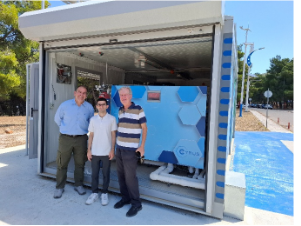
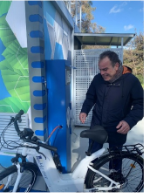
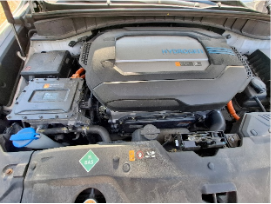
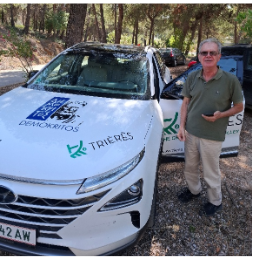
Within the framework of the TETHYS project, members of the University of Cyprus (UCY) carried out technical visits to the facilities of NEEST (New Energy Environmental Solutions & Technologies) in Athens, Greece
The visits supported the project’s dissemination and networking activities by strengthening collaboration between academia and industry in the field of hydrogen storage and utilisation technologies.
During the visits, UCY researchers (Stylianos Stavrinides: 28/6/2025–19/7/2025; Dimokratis G.E. Grigoriadis: 18/6/2025–8/7/2025) engaged with NEEST engineers working on hydrogen production, storage and compression systems. The activities included technical meetings, presentations, and visits to the first HRS station operated in Greece as well as other H2 solutions. These interactions provided valuable insights into technological challenges, system integration aspects and industrial perspectives in hydrogen technologies.
The visit particularly benefited both participating researchers. The PhD student, Stylianos Stavrinides, gained first-hand exposure to practical hydrogen technologies and industrial implementation aspects, supporting the development of his research on H2 compression. At the same time, Prof. Dimokratis G.E. Grigoriadis strengthened collaboration with NEEST researchers and explored opportunities for integrating hydrogen technologies with offshore renewable energy systems.
Overall, the visits enhanced knowledge exchange, supported dissemination of the TETHYS project objectives, and reinforced the collaboration between UCY and NEEST within the emerging European research ecosystem on green hydrogen and renewable energy technologies.
Dimitris Georgousis' Intership at NEEST
15 July, 2025
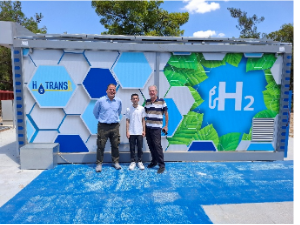
The internship at Neest, located at the Leukippos Science and Technology Park of the Democritus Research Center, was productive and professionally valuable.
The main focus of the work was the modeling and scaling of hydrogen production units and storage systems to support increased centralized power from floating wind farms, as well as from individual floating offshore wind turbines. The objective was to assess how hydrogen systems can be dimensioned and integrated to handle higher power outputs in offshore environments, ensuring technical feasibility and scalability.
The project was carried out in collaboration with experts in the field, including Manos Zoulias and George Kaplanis, whose input contributed to the technical direction and evaluation of the models.
In addition, further research ideas were discussed for future funding applications. Meetings are also planned with start-up companies working on hydrogen-powered floating platforms, aiming to explore potential collaborations and practical implementation pathways.
Stylianos Stavrinides' Intership at NEEST
July 2025, NEEST, Athens
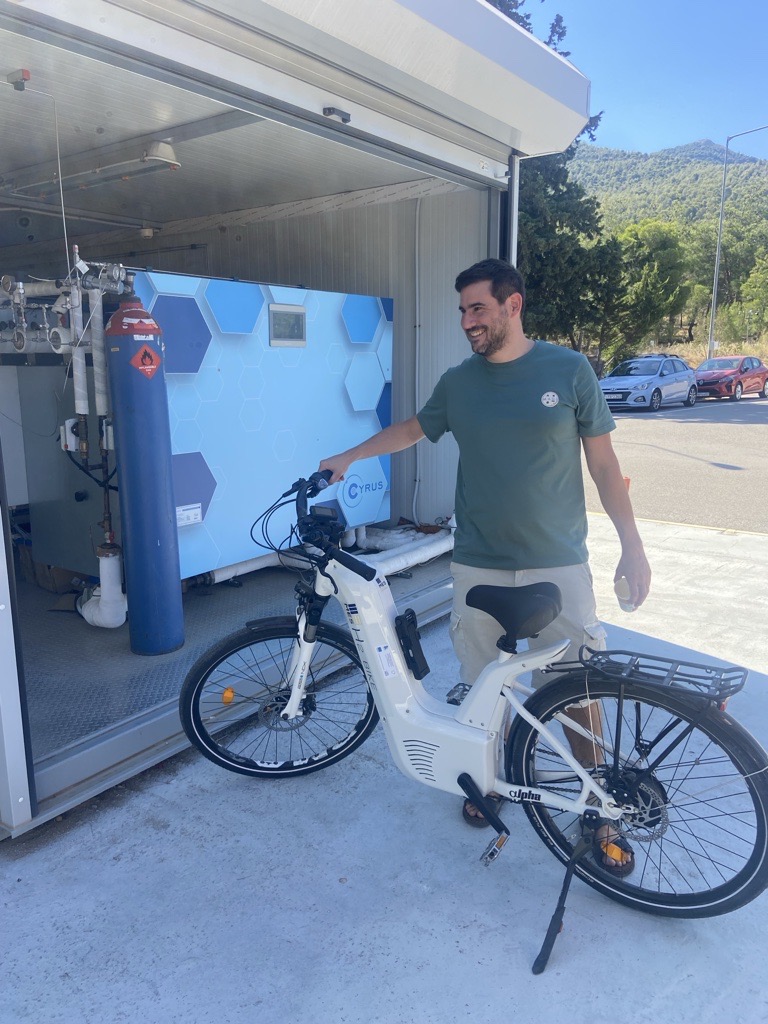
A three-week internship was conducted, which included training on the design and operation of a small Hydrogen Refueling Station (HRS), as well as discussions with experts on hydrogen technologies. NEEST operates an HRS that includes the production, compression and storage of green hydrogen, which is used for refueling light fuel cell vehicles.
The training program focused on a comprehensive introduction to the working principles of all system components of the HRS, along with detailed discussions on the techno-economic aspects and the current market for green hydrogen. Special attention was also paid to safety measures required for the operation of an HRS. Standard safety protocols and risk mitigation practices were presented. A hands-on demonstration of the operation of each component of the HRS was carried out, alongside optimal operational strategies for maintaining maximum equipment performance and lifespan. The training also involved troubleshooting of common system errors and how they can be effectively resolved.
The internship provided substantial theoretical and technical knowledge that can serve as a valuable reference to our ongoing research on hydrogen compression and storage. It was also an important transfer of technical expertise within the rapidly growing share of green hydrogen in the energy transition.
Last Updated on March 17, 2026