
Summary of Research Project
Given the ongoing increasing urban density and the emerging need for sustainability of the built environment, the employment of renewable energy mechanisms within urban environments and their performance improvement become increasingly significant. Along these lines, open public spaces may be activated through use of appropriately designed urban elements that integrate the function of shelter and renewable energy production, i.e., shading users from direct solar radiation and generating energy from solar gains. Presently, photovoltaic systems are typically installed on building roofs and on the ground due to the relatively heavy weight structure of traditional silicon-based photovoltaic modules and the high energy production achieved. Moreover, the use of photovoltaic systems in open public spaces remains essentially unexploited. In achieving increased implementation potential and architectural integration possibilities of photovoltaics in open public spaces, as well as energy production performance, an adaptive lightweight and unitized prototype canopy structure with integrated thin-film photovoltaic modules placed on aluminum substrates, is developed in the current research project. The structure’s configuration and the photovoltaic modules orientation adapt to the sun movement, in improving energy production and shading performance. A cable net with a secondary system of continuous cables of variable length and struts, connected to primary perimeter beams is responsible for the stability and actuation of each structural unit of the system supporting the photovoltaic modules. In the development of the system, minimization of materials, construction time, energy consumption and operation costs are aimed at through automated fabrication, structural and technical simplicity and minimum number of actuation components. The adaptive urban canopy photovoltaics system is being investigated in simulations, and its structure, experimentally on a prototype unit in scale 1:10 that serves as proof-of-concept. The developed system is envisaged to provide technological innovation in achieving mass-customization and optimum design solutions with regard to urban, architectural, structural engineering, kinematics, control and energy performance criteria leading to a technology-driven activation of open public spaces, as well as thermally comfortable and sustainable urban environments.
Research Goals
At the epicenter of the proposed project is the design, analysis, prototype realization and experimental testing of a novel adaptive canopy structure, as well as the performance evaluation of the integrated photovoltaics system that will provide a proof-of-concept at various levels of development and implementation. In addition, the following aspects comprise specific scientific and technological goals that are expected to be met by completion of the research project:
- The development of a methodological approach to interdisciplinary, integrative design, where architectural, structural, control engineering and energy technological considerations will have to be effectively accommodated from early design stage for yielding an optimal result.
- The design and realization of an adaptive structural system with photovoltaic aiming at improved conditions with regard to minimum self-weight, efficient load transfer, kinetic operability and energy performance. The design solutions will promote desirable construction related features like modular assembly, re-usability and environmental friendliness.
- The motion control system and the control methodology that will be applied, aiming at simple actuation requirements and minimum energy consumption.
- The performance evaluation of the thin-film photovoltaic modules, in improving energy production and solar radiation/ shading performance.
- The experimental verification of the structural systems kinematics and assessment of the energy consumption during operation, as well as the control components implementation, maintenance and life-duration.
Structure of Research Activities
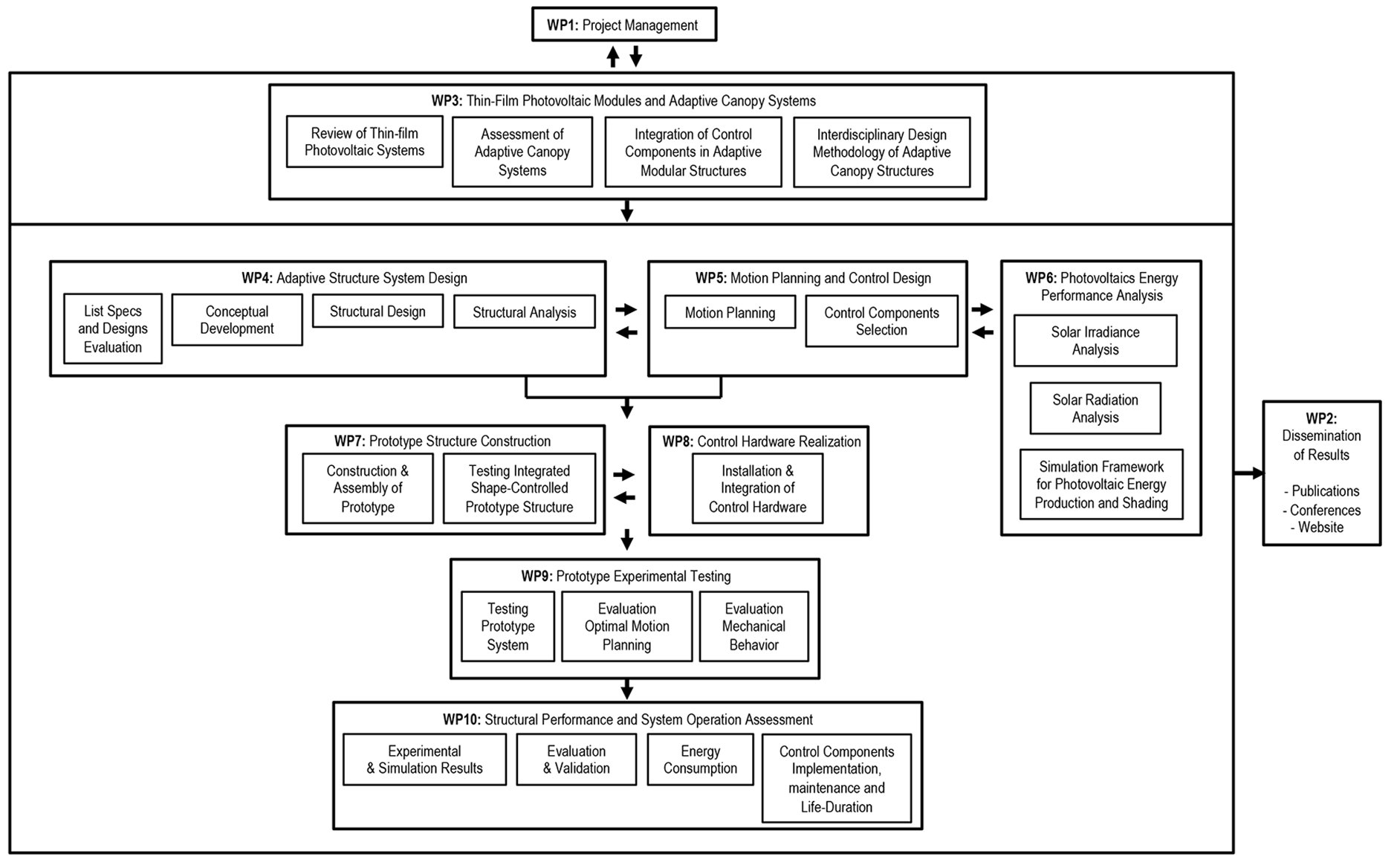
Fig. 1. Structure of research activities
Marios C. Phocas, Ph.D. Professor, Department of Architecture, University of Cyprus, Coordinator, Principal Investigator
Eftychios G. Christoforou, Ph.D., Associate Professor, Department of Mechanical and Manufacturing Engineering, University of Cyprus, Research Associate
George Tryfonos, Ph.D., Department of Architecture, University of Cyprus, Special Scientist
Panagiota Dimitriou, Dipl.-Eng., Department of Architecture, University of Cyprus, Special Scientist
Eleftherios Vourkos, Dipl.-Eng., Department of Mechanical and Manufacturing Engineering, University of Cyprus, Special Scientist
Maria Matheou, Ph.D., Junior Professor, Institute for Lightweight Structures and Conceptual Design, ILEK, University of Stuttgart, F.R. Germany, External Collaborator
Andreas Müller, Ph.D., Professor, Institute of Robotics, Johannes Kepler University of Linz, Austria, External Collaborator
Last Updated on November 22, 2024