

Departmental Forum 2025–26: “Narrative Prosthesis: Disability in the Byzantine Lives of Holy Fools”
December 9, 2025
The Dragon and the Amulet: Creative Writing in the Academic World
February 10, 2026Figure 1: Illustration of a Pharmacy in the Italian Tacuinum sanitatis, 14th century by "Magister Faragius" (Ferraguth) of Naples – book scan of Tacuinum Sanitatis https://commons.wikimedia.org/w/index.php?curid=1638852

Figure 1: Illustration of a Pharmacy in the Italian Tacuinum sanitatis, 14th century by "Magister Faragius" (Ferraguth) of Naples – book scan of Tacuinum Sanitatis
https://commons.wikimedia.org/w/index.php?curid=1638852
The Call for New Histories of Healing: Reimagining the Use of Storytelling as Pharmakon
StoryPharm Blog 7 (January 2026)
Pavla Araudo
StoryPharm Doctoral Fellow, University of Bamberg
The name of this project, Storytelling as Pharmakon in Premodernity and Beyond (StoryPharm), carries immense potential for exploration. Just as the Greek word φάρμακον (pharmakon) signifies both a cure and a poison, storytelling can function both as a medium of harm and as a medium of therapy.
It is precisely this ambiguity of pharmakon that has, over millenia, evoked the curiosity of many. The term occupies a prominent position in Western thought, philosophy, and science. Numerous translations of pharmakon, such as remedy or drug, retain the word’s internal opposition and demonstrate that its use cannot be understood simply as healing. Rather, pharmakon denotes a complex process that has always been more contextual than literal.
In Phaedrus, Plato characterizes writing as a corruptive pharmakon, arguing that it threatens memory, intelligence, and ultimately the soul because it offers only the appearance of wisdom rather than its living reality in speech and knowledge. Derrida’s reading of Plato’s argumentation in his well known Plato’s Pharmacy (1981) does not simply overturn Plato’s critique but exposes a tension already at work within it: the term pharmakon itself resists fixation, carrying irreducibly multiple and contradictory meanings. For Derrida, this polyvalence is not an accident to be corrected but a structural feature of language as such, which never operates through pure oppositions or singular meanings, even when authors attempt to control interpretation. Attending to this instability of meaning is crucial for research in health humanities, where narratives of illness, healing, and care are shaped as much by what is said as by what remains unspoken. As historical and feminist critiques of science have shown, silences often signal relations of power, exclusion, and fear of losing epistemic authority or privilege. Embracing Derridean polyvalence therefore enables health humanities to read medical and healing narratives not as transparent representations of experience, but as contested sites in which knowledge, otherness, and care are negotiated.
In contrast with Plato’s understanding of writing as pharmakon, we approach writing as an indispensable process for recording human experience. Without seeking to undermine the importance of oral cultures, we argue that, today, written (or otherwise registered) evidence is often the only means of connecting with premodern times and gaining a glimpse of how the world was lived hundreds or even thousands of years ago. Although such records are always partial and situated, reflecting the particular positions of their authors in space, time, and ontology, they are frequently the only traces that remain. For StoryPharm, the act of writing and recording the present, alongside the exploration of past records, functions as a cure for memory as it sustains acts of remembering, and can even give voice to those who were forced to remain silent.
Storytelling, understood as the conveyance of stories, information, and ideas, is not regarded as a merely therapeutic or uplifting remedy. Although we do explore the past for the purposes of narrative shift and healing, it is first necessary to examine the damage that storytelling and equally, the refusal to tell stories through erasure or silence, has inflicted on many.
Myths and stories shape our reality, our worlds, and even our bodies. It is not only that 'mythology uses the body as the vehicle for demonstrating or expressing the underlying tensions, contradictions, problems, and dilemmas we face’ (King and Hattori: 2001). Mythology, narratives, and storytelling directly influence our bodies and our health. Historically, however, these narrative structures have not been used for the benefit of all people.
For millenia, storytelling about women has functioned as a toxic pharmakon for humanity as a whole. When half of the population is prevented from living to its full potential, the entire community suffers. In patriarchy, women have been deprived not only of the creative act of storymaking but also of the role of storytellers. Instead, they have been rendered objects of narratives that undermine and attack their agency, wellbeing, intellect, and health.
Feminist philosophers of religion identify the transition to monotheism as a critical moment in the expansion of gender inequality. The idea of a single god who created man in his own image implied a hierarchical order in which men stand between women and the divine. As men became the mediators of spirituality, women were gradually deprived of direct access to it. In doing so, they were denied one of the fundamental human needs and came to internalize their subordination.
Based on the narratives about women perpetuated by major monotheistic religions and their uncontested role in shaping premodern societies, the oppression of women deepened further. Women were regarded as ‘less’ than men, and female bodies were framed as the locus of original sin. The identification of women as the culprits of original sin had devastating consequences for their bodies, health, spirituality, and social roles. As premodern societal structures evolved, these attitudes produced unequal distributions of power upon which entire social systems were created. Women were denied equal human rights because they were often not regarded as fully human in the same way as men.
Following this historical trajectory, we argue that words, stories, and data possess immense power to shape individual realities and bodies, and that they continue to exclude women from wellbeing and healthier lives today, subjecting them to the pathogenic effects of inequality. It is therefore essential to examine the harmful narratives surrounding women and their health in order to develop an appropriate anti-body of knowledge.
We understand medicine as a subculture of a powerful type with its own language, epistemology, history, and limitations. The authority of health sciences has long been prominent in societies that prioritize health, wellness, and beauty. Today, fear of illness is among our greatest collective anxieties, despite the fact that, statistically, humanity has never been healthier or had broader access to healthcare on average. Ulrich Beck (1992) even suggests that this fear is the main organizing principle of modern and postmodern societies.
However, medical hegemony is not a recent phenomenon. Medical sciences and practices occupied a central position in premodern societies as well, closely intertwined with patriarchal structures of religion, politics, and economy. In medieval Europe, for example, religion and medicine were not clearly distinguished from one another. As a result, medical narratives about women, their bodies, and their health within Christian societies were deeply biased and often overtly harmful.
Against this backdrop, StoryPharm seeks to reclaim the power of narrative as an antidote to oppression and silence. Individual research projects aim to address gaps in our understanding of healing practices and their development in premodern times. By exploring narratives of pain, suffering, pharmaka, and modern interpretations of premodern medical knowledge and healers, we aim to broaden the field of medical humanities through historical evidence, particularly because medical epistemology builds upon its own historically biased narratives.
From this perspective, engagement with the past can function as a restorative pharmakon when medical histories are reimagined and reframed with care. Grounded in discursive and narrative analysis of healing stories, we seek to (re)create narratives that are balanced and that restore agency. Drawing on Ludwig Wittgenstein’s concept of aspect shift (1958) and Erving Gofmann’s frame analysis (1974), we argue that changes in conceptual or emotional perspectives can transform the meaning of stories, histories, and understandings of healing, shifting them from negative to neutral or even positive interpretations.
The reframing of the history of medicine thus becomes a healing process for science and healthcare alike, and a resource for narrative medicine as defined by Rita Charon (2006). Contextualizing illness, suffering, and pain; understanding disease etiology and the emotional factors responsible for suffering; and engaging with the lives of healers and patients allow us to use narratives of the past as sources of inspiration and empowerment, even when we talk about un-wellness, ill-ness, and dis-ease.
References
Beck, U. 1992. Risk Society: Towards a New Modernity. London: SAGE Publications
Charon, R. 2006. Narrative Medicine: Honoring the Stories of Illness. Oxford: Oxford University Press
Cleghorn, E. 2021. Unwell Women: A Journey Through Medicine and Myth in a Man-Made World. London: Penguin
Derrida, J. 1981. Dissemination, trans. B. Johnson. Chicago: University of Chicago Press
Goffman, E. 1974. Frame Analysis: An Essay on the Organization of Experience. New York: Harper & Row
Green, M. H. 2008. “Gendering the History of Women’s Healthcare”, Gender & History 20.3, 487–518
King, H. and N. Hattori. 2001. “Mythology and the Body”, in C. Blakemore and S. Jennett (eds) The Oxford Companion to the Body. Oxford: Oxford University Press
Wittgenstein, L. 1958. Philosophical Investigations. Oxford: Basil Blackwell


StoryPharm has received funding from Horizon Europe Programme for Research and Innovation under the action Horizon MSCA Doctoral Networks, Grant Agreement No. 101169114 and the UK Research and Innovation with Grant Ref: EP/Z534523/1

Anna Komnene’s Alexiad (12th-century manuscript). Biblioteca Medicea Laurenziana, Florence. View source
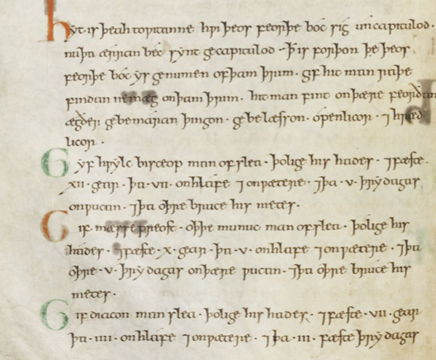
Figure 1: Cambridge, Corpus Christi College, MS 190 (Penitential of Theodore), ca. 1000–1099
A penitential manuscript from Exeter (UK) that classifies sexual transgressions under normative categories and assigns penances according to repetition and severity.
Image courtesy of the Parker Library, Corpus Christi College, Cambridge (CC BY-NC 4.0).
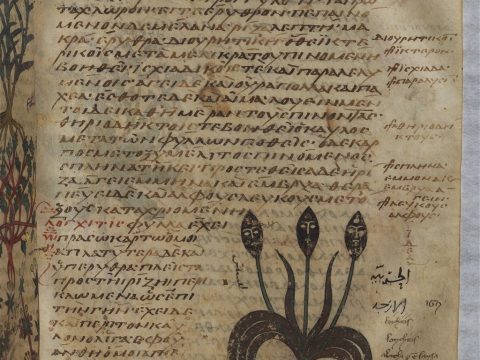
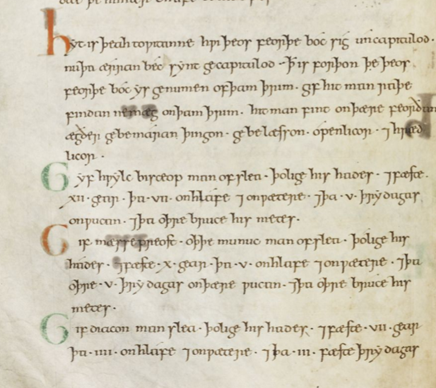

Figure 1. Ionchitis, illustration from De materia medica, MS gr. 2179 (Old Paris Dioscorides), 8th century, fol. 65r, Bibliothèque nationale de France. (Source: BnF / Gallica)