
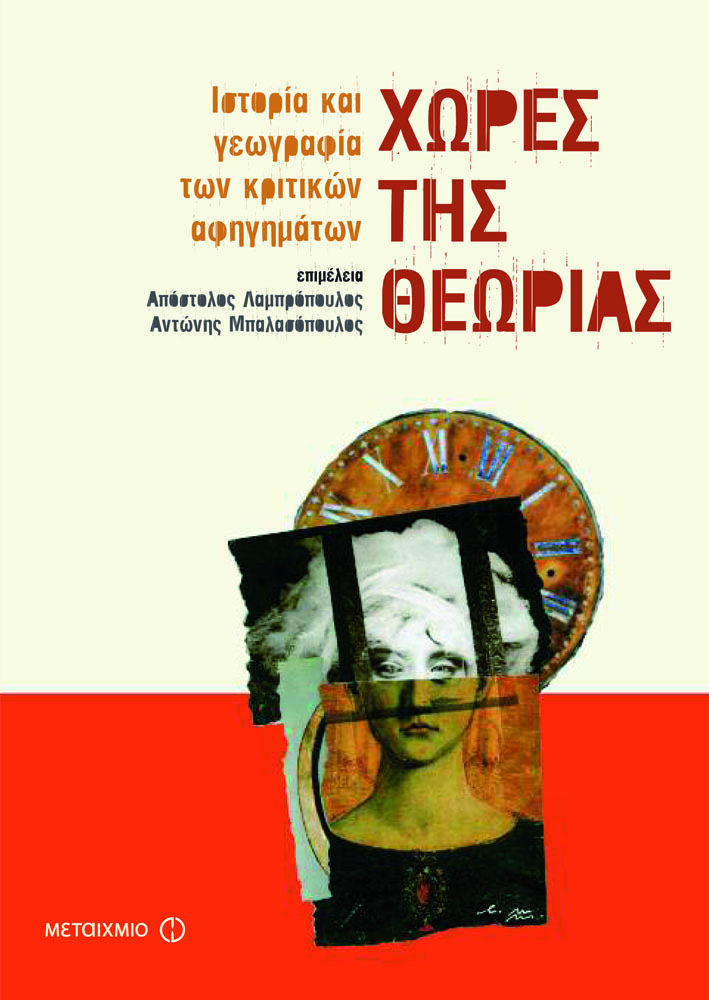
Χώρες της θεωρίας
Απόστολος Λαμπρόπουλος, Αντώνης Μπαλασόπουλος
Οι Χώρες της Θεωρίας περιλαμβάνουν δεκαεπτά πρωτότυπα κείμενα που, από διαφορετική σκοπιά το καθένα, απαντούν στο ερώτημα «ποια Θεωρία, σήμερα;». Ο τόμος αυτός, αντί να αναπολεί και να αρχειοθετεί τα παλιά επιτεύγματα της Θεωρίας, αποπειράται να πιάσει τον σφυγμό της στον ελληνόφωνο χώρο και τον παρόντα χρόνο.
Conformism, Non-Conformism and Anti-Conformism in the Culture of the United States
Antonis Balasopoulos , Gesa Mackenthun, Theodora Tsimpouki
The essays collected in this volume – the outcome of the EAAS convention in Cyprus in 2006 – form a crossroads between a number of disciplines (literary theory and criticism, film studies, history, cultural studies, sociology); they are all animated – in different ways and to different extents – by a healthy suspicion towards the idea that the concepts of conformism, non-conformism and anti-conformism are transhistorically static or transcendentally self-evident. The conceptual contours of the subject are investigated before the topic is then explored in historical perspective, in its textual manifestations, and with regard to its stakes in visual culture. The collection is rounded off with a critical glance at commercial aspects of conformism and anti-conformism. The volume includes essays by Donald Pease, Heinz Ickstadt, Susana Delfino, Albena Bakratcheva, Marek Wilczynski, Johannes Völz, Marc Amfreville, Andrew S. Gross, Yves-Charles Grandjeat, Thomas Pughe, Susanne Rohr, Peter Loizos, Dimitris Liokaftos, Hilaria Loyo, Alexandra Antonis Balasopoulos (Ed.), Gesa Mackenthun (Ed.), Theodora Tsimpouki (Ed.)Ganser and Karin Hoepker, Frank Mehring, Berndt Ostendorf, and Arthur Redding.
Romantic Futures: Legacy, Prophecy, Temporality
Evy Varsamopoulou
Romantic Futures is a collection which explores the significance of futurity in British Romanticism from a comparative perspective in three defining manifestations: the future as conscious legacy, by which is meant both influences or continuities and the (anticipations of) impact on the future; the future as revealed by prophecy, whether via religious figures or superstitions; and, a meditation on the temporality of the future, or the future as a concept. The book brings together a wide range of theoretical and disciplinary perspectives: from utopian studies, history, religion and cultural theory to future studies, neuroscience, video games and art history. Aiming to increase and diversify current critical engagement and highlight the contemporary relevance of the Romantics’ multivalent preoccupation with the future, this collection renews the dialogue between Romanticism and our critical relation to its contemporaneity, especially as it speaks to current understandings of the future in the sciences, arts and humanities.

Reading Texts on Sovereignty
Stella Achilleos (Anthology Editor) , Antonis Balasopoulos (Anthology Editor)
Reading Texts on Sovereignty charts the development of the concept from the classical period to the present day. Defined in antiquity as an absolute or supreme type of power, sovereignty's history has been marked ever since by numerous moments of crisis and contestation through which its meaning has been redefined and reconfigured. Using extracts of key texts selected and analysed by leading contributors from the USA, the UK, New Zealand, Japan, Cyprus, Finland, France, Austria, Israel, and Italy, this volume examines these moments and how different societies have grappled with sovereignty through the ages.
The book explores a diverse range of geographical and cultural contexts within which the issue of sovereignty became critical, including ancient China and medieval Islam. In addition, the book includes chapters that respond to the vital interplay between the development of the theory of sovereignty and such momentous historical events and developments as the birth of the democratic polis in the classical world, the legal and political developments that attended the rise of the Roman and Islamic empires, the bitter struggles over sovereign rights between the 'temporal' and 'spiritual' authorities of medieval and early modern Europe, the English Civil War, the French and American Revolutions, and the October Revolution.
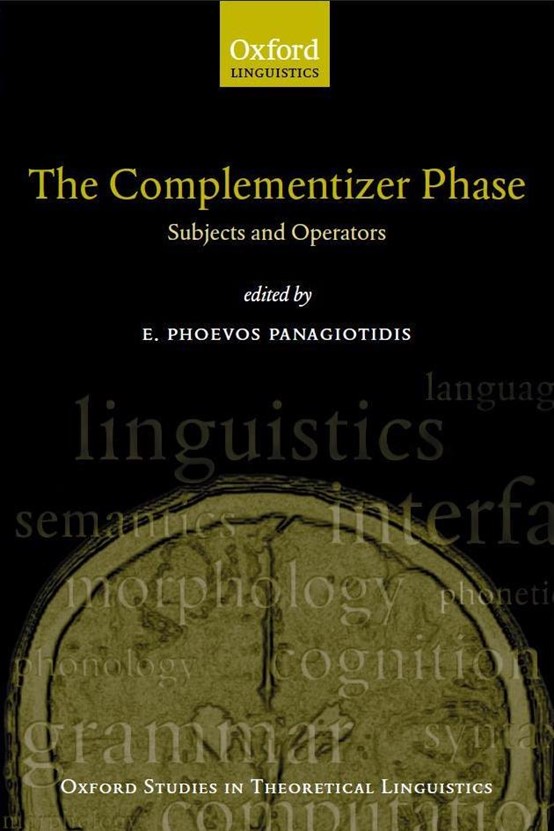
The Complementizer Phase (2010)
Phoevos Panagiotidis
This book draws together nine original investigations by leading linguists and promising young scholars on the syntax of complementisers (eg that in She said that she would) and their phrases. The chapters are divided into two parts, each of which highlights aspects of the behaviour and function of complementisers. The first part looks at how and when subjects, or parts of subjects, can and cannot move outside their canonical position in a sentence. Each chapter examines and compares the relevance of a number of syntactic factors in languages such as English, Italian, Spanish, Greek, Brazilian Portuguese, and Bavarian. In the second part, the focus turns to the nature and function of complementisers themselves, with discussions drawing on evidence from Italian, Italian dialects, Hebrew, and Dutch.

A — the lexical status of adjectives (2022)
Phoevos E. Panagiotidis
This volume brings together seven eminently original attempts to answer a sorely neglected question: What are adjectives? Although the positioning of adjectives as well as aspects of their semantics have been investigated in depth, their actual status as a lexical category has generally been treated superficially in the linguistic literature.
In this volume, the different approaches to the categorial identity of adjectives put forward include their position in the inventory of lexical categories, the elusive noun-adjective link, the functional entourage of adjectives and their relational character, the role of concord and possession – and so on. The contributors bring different viewpoints as well as a variety of language data into the discussion, from Chinese to Indo-European, and on to Niger-Congo languages.
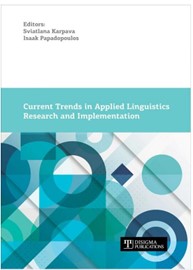
Current Trends in Applied Linguistics Research and Implementation
Sviatlana Karpava
This book is a collection of theoretical and empirical studies based on principled data collection methods, data analysis and interpretation. It aspires to shed light on the diversity and interdisciplinarity of applied linguistics as contributors work with the data and perspectives that come from different fields such as psychology, sociology, education, language teaching, public policy, information technology and other areas of study. The contributors, applied linguists, implement a systematic language analysis based on the theories and multiple approaches that come from different fields in order to solve language-related problems. Therefore, this edited volume may be of great interest and importance for researchers, students, policy-makers and educators interested in applied linguistics research and implementation.
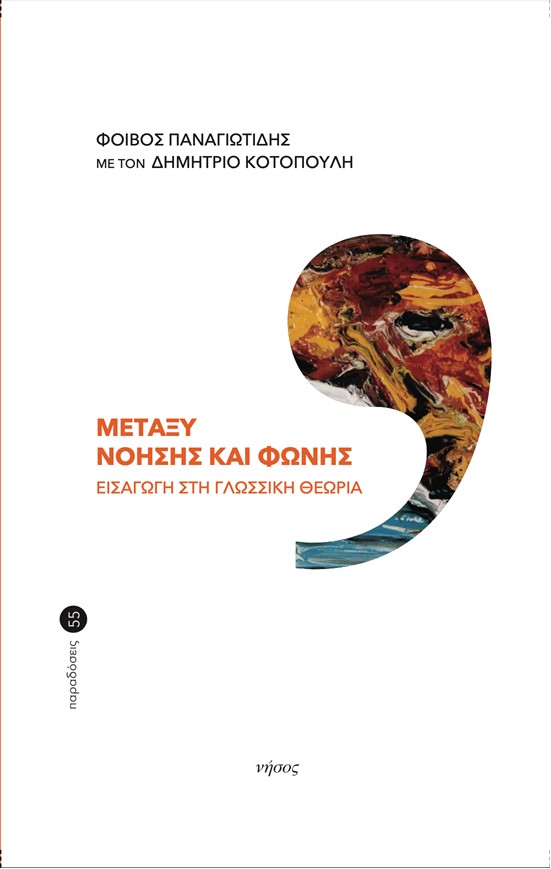
Μεταξύ Νόησης και Φωνής (2023)
Φοίβος Παναγιωτίδης με τον Δημήτρη Κοτοπούλη
Το "Μεταξύ νόησης και φωνής" εισάγει τους αναγνώστες του στη γλωσσική θεωρία. Κάθε κεφάλαιο του βιβλίου απαντάει το καθένα σε μία βασική ερώτηση: τι είναι γλώσσα και τι είναι γλωσσολογία, από πού προέρχεται και πώς κατακτάται η γλώσσα, γιατί υπάρχουν τόσο πολλές διαφορετικές γλώσσες, τι είναι η γραμματική και πώςτη μελετάμε, ποιες αρχές διέπουν τη γραμματική των ανθρώπινων γλωσσών.
Διαβάζοντας θα μάθει κανείς τι πραγματικά γνωρίζουμε για τη γλώσσα, ενώ θα ζήσει τη χαρά της αποδόμησης και κατεδάφισης δημοφιλών μύθων γύρω από αυτή. Παράλληλα θα εντρυφήσει σε θέματα όπως:
- τι γνωρίζουμε για την προέλευση της γλώσσας και για τη σχέση της με τον λόγο, τον πολιτισμό και τη νόηση,
- το μέγα μυστήριο και νυν επιστημονικό πεδίο της γλωσσικής κατάκτησης (ιδίως από τα βρέφη και τα νήπια),
- τα δομικά υλικά της γλώσσας αλλά και τις αρχές με βάση τις οποίες χτίζονται οι γλωσσικές δομές,
- πώς μπορούμε να εξηγήσουμε γιατί υπάρχουν τόσες γλώσσες και διάλεκτοι αλλά και γλωσσική αλλαγή.
Το βιβλίο απευθύνεται σε φοιτήτριες και φοιτητές αλλά και στο ευρύτερο κοινό που επιθυμεί να εμβαθύνει στην κατανόηση της σύγχρονης γλωσσικής επιστήμης.
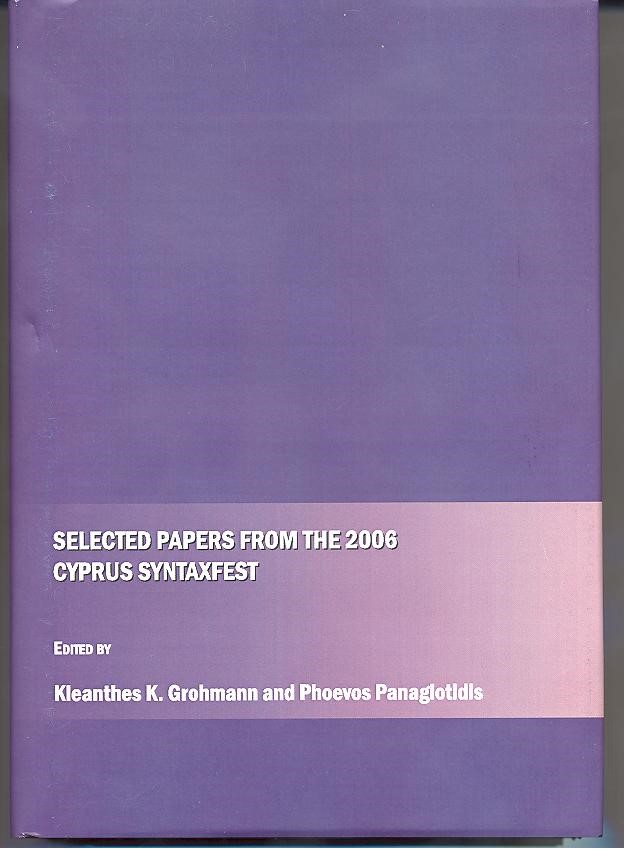
Current Trends in Applied Linguistics Research and Implementation
Edited by Kleanthes K. Grohmann and Phoevos Panagiotidis
The current collection of expanded versions of selected research presented at the Cyprus Syntaxfest reflects a wide variety of approaches to these topics; it also provides a glimpse of the rich sample of cross-linguistic data that informed the discussions of syntactic peripheries and their interface interpretation. It offers eleven studies on clausal and nominal left-peripheral phenomena and their (role in) interpretation in a variety of typologically unrelated languages. More significantly, the contributions collected here underscore the by now established importance and theoretical interest of studying the edge of constituents, whether phasal or not. In every chapter, the blueprint of a general interpretive hierarchy driving and constraining syntax is also retraced throughout.

Handbook of Research on Teacher and Student Perspectives on the Digital Turn in Education
Sviatlana Karpava
In recent years, the traditional way of teaching has been substituted by online teaching. Teachers have had to think about efficient and effective teaching methods and activities in online delivery that can keep students interested and engaged. It is important to examine teacher cognition and its relevance to classroom management and teaching practice as the role of technology in teaching and learning cannot be overestimated.
The Handbook of Research on Teacher and Student Perspectives on the Digital Turn in Education examines the cognitions of teachers and students, their attitudes and perceptions regarding online teaching, and their personal experiences and challenges regarding the use of online platforms and digital tools. This book discusses the implementation of digital technologies in primary, secondary, and tertiary education that facilitates the learning and teaching process and creates a student-centered environment. Covering topics such as digital literacy, student engagement, and pedagogy, this reference work is an essential resource for practitioners, scholars, administrators, policymakers, researchers, academicians, instructors, and students.

Exploring the diversity of Turkic languages
Gulshen Sakhatova, Jaklin Kornfilt, Murad Suleymanov (eds.) (2023).
Exploring the Diversity of Turkic Languages: Studies in Morphology, Syntax and Language. VERÖFFENTLICHUNGEN DER SOCIETAS URALO-ALTAICA, Hasselblatt, C. und Röhrborn, K. (Hrs.). Band 101. Wiesbaden: SUA HARRASSOWITZ Verlag in Kommission.
The volume Exploring the Diversity of Turkic Languages: Studies in Morphology, Syntax and Language Contact is a collection of eight chapters, each presenting research in the field of Turkic linguistics. The papers are divided into two sections within the volume: papers reporting on original research and papers presenting case studies. Each chapter focuses on a specific aspect of Turkic languages and linguistics, ranging from the phonology, morphology and syntax, semantics, language contact phenomena of different modern Turkic languages such as Turkish, Turkmen, modern Azerbaijani, Kazakh, Kyrgyz, Uyghur, Sakha (Yakut), Rhodian Turkish, Old Turkic in Manichaean religious texts, historical Turkic as the literary Eastern Turkic, Chulym as an extremely endangered Siberian Turkic variety, and Khalaj Turkic together with South Azerbaijani and the Eastern Anatolian dialects of Turkish as well. The contributors to this volume include both established scholars and up-and-coming researchers in the field of Turkic linguistics, making for a diverse and thought-provoking collection of papers. The editors hope that the volume will make a significant contribution to the field of Turkic linguistics and stimulate further research and discussion in this fascinating field.
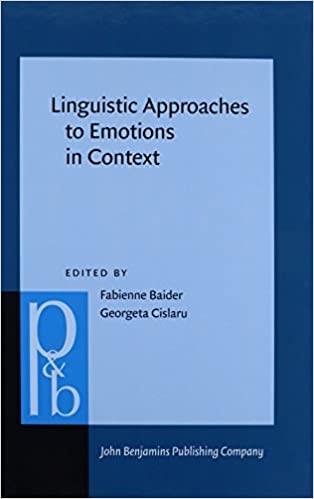
Linguistic Approaches to Emotions in Context
Fabienne Hélène Baider, G. Cislaru
This book presents new issues in the study of the interface of emotions and language, and their use in social context. Two fundamental questions are tackled: the way different languages encode emotional information, and the core role emotions play in languages' structure, use and learning. Seldom treated means of expressing emotions (such as interjections, conditionals, scalarity, allocentric constructions), the social and professional impact of emotions and the latest developments in the interface of speech recognition / emotions are some of the key contributions to this volume. The cross-cultural perspective contrasts new couples of languages (among which Australian aboriginal languages, Cypriot Greek, Italian, Japanese, Romanian, Russian) and addresses sociolinguistic, pragmatic and discursive issues. Most of the papers attempt interesting theoretical articulations that aim at a better understanding of the linguistic and sociolinguistic nature of emotions. This book will be highly relevant for students and researchers interested in emotions, semantics, pragmatics, discourse analysis, as well as prosody and philosophy of language.
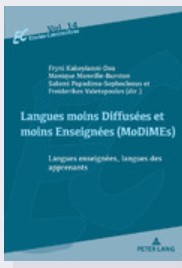
Langues Moins Diffusées et Moins Enseignées (MoDiMEs) : langues enseignées, langues des apprenants
Fryni kakoyianni-Doa, Monique Monville Burston, Salomi Papadima Sophocleous, Freiderikos Valetopoulos
L’objectif principal de l’ouvrage est d’élargir le champ de la réflexion et d’explorer de nouvelles pistes concernant l’enseignement de langues étrangères majeures (souvent L3 ou L4), particulièrement le français, à des apprenants dont la L1 est MoDiME (Langues Moins Diffusées et Moins Enseignées) : polonais, grecs, turcs ou locuteurs de la langue des signes française, par exemple. Les auteurs discutent des défis et obstacles sociaux, culturels, éducatifs ou didactiques rencontrées dans ces situations d’enseignement, dans le contexte plurilingue européen. Différents thèmes y sont abordés, comme la place des langues dans les curricula, les représentations et attitudes des apprenants, les compétences et la formation des enseignants, le rôle des corpus d’apprenants dans la recherche ainsi que les transferts inter-langues. L’ouvrage traite aussi de l’appropriation des formes linguistiques : cohésion discursive (marqueurs de discours, procédés anaphoriques), syntaxe-sémantique du temps et de l’aspect, et traits phonétiques. Ce volume témoigne ainsi de l’intérêt présentement porté à la contextualisation, à savoir aux conditions socio-culturelles de l’enseignement/apprentissage dans la didactique des langues étrangères.
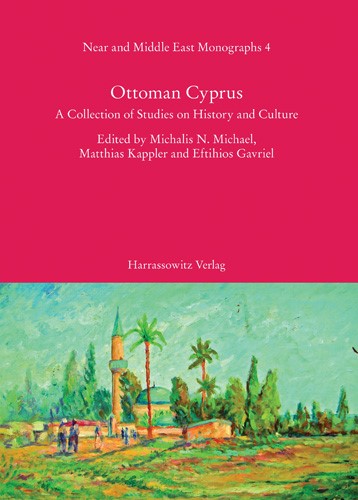
Ottoman Cyprus. A Collection of Studies on History and Culture
Michalis N. Michael, Matthias Kappler, Eftihios Gavriel (eds)
This volume presents new studies on various topics (primarily history, but also art history, folklore, and literature) and offers new approaches to the history of institutions and developments in Cyprus during the Ottoman period (1571-1878), in an effort to propose new interpretative frameworks and a more analytical reading of the historical past. The book is divided into four parts. The first section concerns the history of the island from the eve of the Ottoman conquest until the cession of the island to British administration. The studies of this part follow a chronological order, and analyze developments in Cyprus as an Ottoman province and part of the Empire's periphery. The second part features studies that analyze various particular historical topics, without necessarily following a chronological order. The third part includes studies on literature, folklore and art. An extensive bibliographical guide, a catalogue of archives, and archival material related to Cyprus in the Ottoman period, as well as chronological lists of important officials constitute the fourth and final section.

Cultural Exchanges in Eastern Mediterranean: Asia Minor, Cyprus and Egypt, Cambridge Scholars Publishing, London 2022
Editors: Stelios Irakleous, Michalis N. Michael, Athanasios Koutoupas
The movement of people and objects has always stood at the heart of attempts to understand the course and processes of human history. The history of the Mediterranean is particularly abundant when it comes to issues of migration, colonisation, and trade, initiating thus archaeological, historical, linguistic and cultural discussions. This collection highlights the richness and depth of the multifaceted cultural exchanges of the region and focuses on underrepresented aspects of cultural exchanges in the Mediterranean, with Cyprus having a central role as a crossroads. It responds to the challenge of linking the study of everyday life at the micro-level to macro-scale narratives based on trans-regional engagement.
Different Aspects in Learning and Teaching Turkish as a Foreign Language
Editors: Gulshen Sahatova and Hasan Kaili
This collected volume aims to contribute to the rapidly developing research field of Turkish as a foreign language (TaFL). It presents studies covering a number of contexts in teaching and learning TaFL and Turkish as an academic language in different countries. The issues addressed by the authors include research on the choice of 3rd-person reference forms in the oral narratives of native speakers of Turkish and of those who learn Turkish, on the teaching of Turkish complement clauses, on the drawing of a lexico-grammatical framework for adjectives at A1 and A2 levels, a detailed survey of Turkish for academic purposes. One chapter deals with the analysis of idealized dialogues as featured in most current Turkish textbooks and offers for direct use in teaching practice a list of amusing and commonplace utterances from daily life, while the final chapter deals with inspection of the TaFL coursebooks examining the category of conditionals. With its diverse range of topics and subject matters, the volume intends to reach a wide audience, including researchers, applied linguists, and language instructors in TaFL, as well as publishing houses that deal with the development of TaFL coursebooks. All in all, this volume is thought-provoking and inspiring to new generations of learners and teachers of Turkish.
Religious Communities and Modern Statehood: the Ottoman and Post-ottoman World at the Age of Nationalism and Colonialism
Michalis N. Michael, Tassos Anastassiades, Chantal Verdeil (eds)
Over the last thirty years, historiography has amply illustrated the ways in which modern statehood is linked to a specific form of governmentality characterized by increasing social penetration and control of peoples’ everyday daily lives. State tools included a variety of institutions, such as public education, mandatory military conscription, welfare and were served by complex bureaucratic organizations. As the Ottoman Empire was negotiating both its geopolitical survival and its own form of modern statehood, it tried to control the populations within its realm by instrumentalizing and simultaneously institutionalizing religious communities, thus producing an imperial state formation pattern that was both similar and distinct from other imperial or colonial projects. The existence of the religious communities and the functioning of the Ottoman state on their basis, made the passage from the Ottoman imperial structure to successor national and colonial states a complex process. This volume aims to explore various aspects of the communal organization in the Ottoman Empire for regions such as Asia Minor, Middle East and the Balkans, and to present the changes that occurred within the religious communities during the nineteenth century and particularly during the period running from the Tanzimat reforms to the First World War. Some of the key questions tackled in this volume are: How does the Sublime Porte understand the process of structuring a modern state with respect to religious communities? Who is responsible for modern institutions and why? Are religious actors being re-active or pro-active to the evolutions taking place on the state realm? Is the institutionalization of the religious communities best understood through a top-down institutional approach or thanks to a bottom-up analysis of the various agents’ strategies and interests? What is the legacy of the Ottoman debates and institutions once a territory has transformed into a national or colonial frame

Pragmatique interculturelle : médiations des langues cultures
Baider Fabienne , Cislaru Georgeta
Intercultural Pragmatics gathers interdisciplinary articles focused on language- culture in contact, translation of idioms, conversational analysis in between different language culture etc.

Διεπιστημονικές προσεγγίσεις της μετάφρασης
Συμεών Γραμμενίδης, Ξανθίππη Δημητρούλια, Ευάγγελος Κουρδής, Ελπίδα Λουπάκη, Γεώργιος Φλώρος
Στόχος του βιβλίου είναι η συστηματική παρουσίαση των βασικών εννοιολογικών διαστάσεων του μεταφραστικού φαινομένου. Επιδιώκει να εξετάσει, με κριτικό τρόπο, ορισμένες από τις σημαντικότερες πτυχές της μετάφρασης υπό το πρίσμα γλωσσολογικών, πολιτισμικών, κοινωνιολογικών και σημειολογικών προσεγγίσεων, αναδεικνύοντας έτσι το διεπιστημονικό χαρακτήρα της μεταφρασεολογικής σκέψης στο σύγχρονο παγκοσμιοποιημένο, δικτυωμένο και διαρκώς μεταβαλλόμενο τεχνολογικά περιβάλλον. Το πρώτο κεφάλαιο εστιάζει στον ορισμό του μεταφραστικού φαινομένου καθώς και στις βασικές αρχές τη μεταφρασεολογικής επιστήμης. Στο δεύτερο κεφάλαιο μελετώνται οι γλωσσολογικά προσανατολισμένες προσεγγίσεις του μεταφραστικού φαινομένου καθώς και θεωρητικά ζητήματα, όπως η ισοδυναμία, που άπτονται της μετάφρασης. Στο τρίτο κεφάλαιο, το μεταφραστικό φαινόμενο προσεγγίζεται ως διαμεσολάβηση πολιτισμών, εξετάζονται οι ηθικές διαστάσεις του όπως και τα επίπεδα (μακροδομή/μικροδομή) στα οποία η έννοια του πολιτισμού εμπλέκεται με τη μετάφραση. Στο τέταρτο κεφάλαιο μελετάται η διάδραση μεταξύ της κοινωνικής δομής και ατομικής δράσης στο μεταφραστικό πεδίο. Το πέμπτο κεφάλαιο αναδεικνύει τις σημειολογικές πλευρές της μεταφραστικής διαδικασίας και παρουσιάζει τις τυπολογίες με σημειωτικό υπόβαθρο. Στο έκτο κεφάλαιο διερευνάται η σχέση μεταξύ ιδεολογίας και μετάφρασης με έμφαση στη μετάφραση πολιτικών και δημοσιογραφικών κειμένων. Το έβδομο κεφάλαιο, τέλος, επικεντρώνεται στην ισχυρή τεχνολογική πτυχή της μετάφρασης σήμερα και τα διάφορα επίπεδά της (λεξικογραφικές και τεχνολογικές βάσεις δεδομένων, μεταφραστικές μνήμες, χρήση διαδικτύου, σώματα κειμένων, συστήματα αυτόματης μετάφρασης).
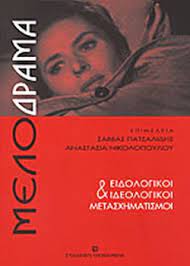
Μελόδραμα: Ειδολογικοί και Ιδεολογικοί Μετασχηματισμοί
Σάββας Πατσαλίδης και Αναστασία Νικολοπούλου
Τη δεκαετία του 1970, μαζι με τη συστηματική ακαδημαϊκή μελέτη του μελοδράματος (ιδιαίτερα σε χώρους όπως ο κινηματογράφος και η τηλεόραση) είχε αρχίσει παράλληλα να αναπτύσσεται και να εδραιώνεται μια σαφής θεώρηση του είδους, η οποία περιθωριοποιούσε τις πολιτικές και ιστορικές συνισταμένες του για το χατίρι αβέβαιων και μάλλον ισοπεδωτικών όρων του τύπου «μελοδραματισμός» , «αισθησιασμός» κ.ο.κ., που λίγο-πολύ έτειναν να ταυτίσουν το μελόδραμα με τον «υψηλό συναισθηματισμό» και τις έντονες ηθικές συγκρούσεις (βλ. «καλό/κακό», «ορθό/λάθος», «αποδεκτό/απαράδεκτο» κ.λπ..). Ο τόμος αυτός, σε μια προσπάθεια αναθεώρησης της παραπάνω άποψης, εξετάζει το μελόδραμα από μια ιδεολογική και ιστορική σκοπιά, καθώς και τον ευρύτερο ρόλο που διαδραμάτισε ως πεδίο σύγκρουσης ανάμεσα στην «υψηλή» και «λαϊκή» κουλτούρα από τα τέλη του 18ου αιώνα έως σήμερα.
Ανάμεσα στα ερωτήματα που τίθενται προς συζήτηση από τους συγγραφείς του τόμου είναι και τα εξής: Ποια θέση παίρνει το μελόδραμα στις ταξικές και πολιτισμικές συγκρούσεις ή στις συγκρούσεις των φύλων; Γιατί οι θιασώτες της «υψηλής» τέχνης το απορρίπτουν μετά βδελυγμίας ως είδος χωρίς καμία αισθητική ή γενικά καλλιτεχνική αξία; Πως συμβάλλει ο συγκινησιακός του λόγος στη δημιουργία μιας δυνάμει κριτικής σκέψης, ακόμη και στις περιπτώσεις εκείνες που σαφώς δείχνει ότι υιοθετεί την ιδεολογία μιας συντηρητικής κουλτούρας;
Στα πλαίσια αυτής της προβληματικής, και για λόγους ιδεολογικής, αισθητικής και πολιτιστικής ευρυχωρίας, οι εργασίες του τόμου αυτού στρέφονται σε χώρες όπως η Ελλάδα, η Αγγλία η Γαλλία, η Γερμανία, και η Αμερική από όπου αντλούν τα παραδείγματα τους (θέατρο, λογοτεχνία, κινηματογράφος, τηλεόραση, λαϊκές παραδόσεις, καθημερινός λόγος).
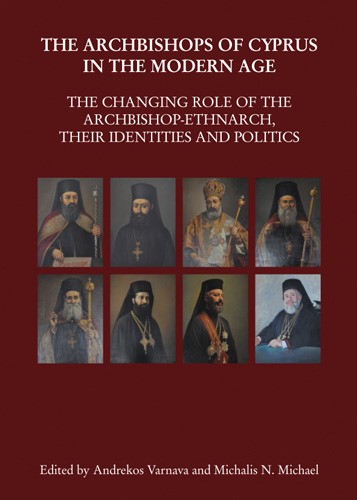
The Archbishops of Cyprus in the Modern Age. The Changing Role of the Archbishop-Ethnarch, their Identities and Politics
Andrekos Varnava, Michalis N. Michael (eds)
Since the onset of Ottoman rule, but more especially from the mid-18th Century, the archbishops of the autocephalous Cypriot Orthodox Church have wielded a great deal of political power. Most people of a certain age will remember the bearded monk who became a Greek nationalist politician and the first President of the Republic of Cyprus in 1960, Archbishop Makarios III. Indeed, his presence at Madame Tussaud's is a reminder of his stature. But were all Cypriot archbishops such political and powerful Greek nationalists? This study is unique in its exploration of the peculiar role of the archbishop-ethnarch and, as such, offers valuable historical and political insights into the phenomenon. This book seeks to restore the historical record and offer the Church of Cyprus a starting point from which to reassess its past and move forward. The Church of Cyprus, as with all other churches in the Western world, has a social and spiritual role to play in society. Therefore, this book should be read first and foremost as offering a political history of religious authorities in the pre-modern, modern and post-modern eras, and secondly as a work examining how nationalist politics evolved and was co-opted by religious authorities in order to re-establish political hegemony from a secular European colonial power, and the consequences this entailed after the end of empire.

Innover : pourquoi et comment ? [Numéro 1]
Olivier Delhaye, Fryni Kakoyianni-Doa
À l’issue des travaux du Congrès, il a été décidé de réunir, dans ce premier numéro de la Revue MÉTHODAL, une sélection d’articles rédigés par les intervenants. Ils traitent, dans l’ordre de leur apparition dans le sommaire du numéro 1, de l’innovation dans l’enseignement des langues aux adultes, de pratiques innovantes de formation et d’évaluation, de nouvelles approches et perspectives de l’apprentissage des langues, de l’innovation dans l’enseignement à des publics particuliers, du renouveau dans l’enseignement des langues à l’université et en formation continue, des questions de la culture, de l’interculturalité et de la créativité, de nouvelles approches interdisciplinaires, de l’innovation dans les approches proprement linguistiques, de la compétence de communication en langue étrangère et de son évaluation, de technologies innovantes et enfin, de formations innovantes proposées aux enseignants des langues.
Innover : pourquoi et comment ? [Numéro 2]
Olivier Delhaye, Fryni Kakoyianni-Doa
Dans ce second numéro de la Revue MÉTHODAL, consacré à la même thématique que celle du premier, une nouvelle sélection d’articles qui traitent, dans l’ordre de leur apparition dans les pages qui suivent,
- de l’innovation dans la conception des programmes de français, langue étrangère ou des programmes transversaux,
- de l’innovation dans la formation linguistique en ligne et ouverte à tous,
- de l’apport du jeu dans l’apprentissage du français, langue étrangère,
- de l’éveil aux langues à la maternelle,
- de l’emploi du TBI en classe de français,
- de l’exploitation innovante de certifications en langue étrangère,
- de l’intégration des nouvelles technologies dans l’enseignement de la grammaire française,
- du rapprochement qui peut être effectué des visions de l’apprentissage de Jean-Jacques Rousseau et de Jean Piaget,
- du théâtre au service du français, langue étrangère,
- enfin, du rôle de la génétique dans l’acquisition du langage.
Vers l’excellence pédagogique, didactique et linguistique [Numéro 3]
Olivier Delhaye, Fryni kakoyianni-Doa
Nous réunissons dans ce numéro de la revue du laboratoire ouvert, interuniversitaire et interdisciplinaire pour la méthodologie de l’enseignement/apprentissage des langues (Méthodal), les résultats de recherches concentrées sur la qualité, l’efficience et l’efficacité des formations linguistiques. Ces résultats font se rapprocher un peu plus de l’excellence, les pédagogies mises en œuvre, les approches didactiques pratiquées, la linguistique ou les techniques de recherche appliquée elles-mêmes.
Dans les pages qui suivent, 25 articles rapportent ainsi les conclusions d’études touchant aux domaines de la didactique des langues et des cultures, de la pédagogie, de l’évaluation, à la formation de publics spécifiques, aux politique linguistiques, à la linguistique, à la sociolinguistique, à la littérature dans ses relations avec la formation linguistique, enfin aux pratiques de classe alternatives et aux modèles innovants d’exploitation des technologies de l’information et de la communication.
Η Διδακτική της Μετάφρασης στον Ελληνόφωνο Χώρο: Σύγχρονες Τάσεις και Προοπτικές
Efi Lambrou, Georgios Floros
Ο όρος Διδακτική της μετάφρασης θα μπορούσε να θεωρηθεί περιττός και ίσως να αντικατασταθεί με τον όρο Θεωρία της μετάφρασης, δεδομένου του ότι στις εφαρμοσμένες επιστήμες η ουσιαστικότερη επιδίωξη της θεωρητικής εξήγησης και περιγραφής είναι να καταστεί ένα φαινόμενο διδάξιμο. Επομένως, η Θεωρία της Μετάφρασης υπονοεί σε πολλές περιπτώσεις σχεδόν αυτόματα τη Διδακτική της. Μπορεί η θεωρία να θέσει τις βάσεις για την απόκτηση της εμπειρίας; Διδάσκεται εν τέλει η μετάφραση; Εάν ναι, σε ποιο βαθμό και ποια τα μέσα, τα οποία πρέπει ή είναι δυνατόν να χρησιμοποιηθούν, ώστε η Διδακτική της Μετάφρασης να διέπεται από σύγχρονες τάσεις; Τι είδους προοπτικές προσφέρουν για το μέλλον; Τα άρθρα που περιλαμβάνει αυτός ο τόμος πραγματεύονται όλα τα παραπάνω ζητήματα. Επιχειρείται να καταγραφεί η ελληνόφωνη πραγματικότητα στη διδακτική της μεταφραστικής πράξης, μια πραγματικότητα που δεν υπήρξε αυτονόητη μέχρι πρόσφατα. Ο τόμος αυτός έχει και καθαυτό διδακτική αξία. Απευθύνεται όχι μόνο στην ερευνητική κοινότητα, αλλά και σε όσους σπουδάζουν τη Μετάφραση, είτε ως διαδικασία είτε ως αποτέλεσμα. Φιλοδοξεί να λειτουργήσει ως εκπαιδευτικό εγχειρίδιο και, εν τέλει, να συμβάλει στη συνειδητοποίηση των διεργασιών που πραγματοποιούνται κατά τη μεταφραστική διαδικασία.
Méditerranée ruptures et continuités (TMO 37)
May Chehab, Yiannis Ioannou, Françoise Métral
Après Chypre, hier et aujourd’hui, entre Orient et Occident, TMO 25, 1996, qui avait mis l’accent sur les échanges et les interrelations, et Chypre et la Mediterranee orientale, TMO 31, 2000, ou les thèmes se croissaient autour de la question de formations identitaires en Méditerranée orientale, la clôture de siècle a permis de réfléchir sur la nouvelle vision de la Méditerrané qui s’est progressivement imposée depuis la fin du XIXe siècle . Ainsi, l’objectif de ce troisième volume de la collection, qui réunit les Actes du colloque Méditerranée : Ruptures et Continuités qui s’est tenu a Nicosie du 20 au 22 octobre 2001, a précisément été de tenter de rendre compte de cette évolution des représentations de la Méditerranée.
Les représentations de la mer intérieure ont été soumises aux interrogations de métrologies nouvelles et plurielles qui, sans toujours rompre avec les legs antérieur, ont souvent remis ce dernier en question. Car le Colloque s’enrichit aussi des nouvelles ouvertures - ruptures ? - que le caractère global de la diffusion des savoirs a rendues inéluctables : L’approche pluridisciplinaire, un acquis des nos publications, propose une vue plus complète, et plus complexe, un dialogue entre des disciplines aux contours eux-mêmes élargis.
Cinq parties constituent autant d’axes de cette interrogation multiple. I- « Mouvements de pensée » place de la Mer intérieure sous les feux croisés de l’anthropologie, de l’histoire des représentations, de l’histoire des idées et de la psychanalyse. II- « Thèmes et images » recense et interprète la présence de la Méditerranée dans les productions littéraires orales et écrites. III «La Méditerranée, lieu de création» regroupe les études sur les interprétations symboliques et poétiques de l’espace. IV- « Langue(s) et identité(s) permet de voir les ruptures et continuités de la relation entre la langue, l’histoire et l’identité chypriotes, de l’époque des royaumes automnes a celle de la publicité et des guides touristiques d’aujourd’hui. Enfin, V « Coexistences et contrastes communautaires » examine comment Turks, Grecs, Arméniens et Maronites co-existent dans l’espace et le temps de la Méditerranée orientale.
Melodrama: The Cultural Emergence of a Genre
Michael Hays, Anastasia Nikolopoulou
Using the term "melodrama" as an abstract category to describe almost any literary mode--from nineteenth-century novels to 20th-century films--modern critics have obscured the genre's historical and cultural functions as well as the nature of its specific appeal to working-class audiences. To rectify this situation, the essays in this innovative and international collection redirect attention to the historical, social, and cultural milieu in which melodrama emerged.

Mnemosyne o la costruzione del senso
May Chehab, Beatrice Barbalato
In keeping with the theoretical framework of the Osservatorio scientifico della memoria scritta, orale, filmica e del patrimonio autobiografico, which oversees the annual publication of Mnemosyne o la costruzione del senso, this issue explores the world of dreams from the perspective of different disciplines, with focus on observation: the personal way of recounting dreams, the relationship of the dream top reality, the internal and external origin of the dream. Looking at the essays published here, it seems that the subject of the dream increasingly wants to understand the meaning of the future in their dreams, rather than getting a glimpse of the signs of their past. Interpreting dreams according to Freud or Jung, reading dreams with interpretive keys, or the experiences of neurosciences, remain henceforth in the background. The artists who generally take their unconscious as the basis of their creativity, give the dream a prominent place. I also happened that some scientists attributed some her discoveries to dreams. Literature, cinema, the figurative arts, the sciences, which increasingly tend to fragment the chronological order of time, place dreams on the same level as factual experience. In sum, they give the world of dreams a new face. In other words, Bergman, Fellini, Tarkovsky, Lynch, Truffaut, essayists such as Pachet and many contemporary writers (such as Elytis, Breton, Michaux, Bauchau) do not recount themselves by distinguishing dreams from tangible experience: they consider both as an active part of life.
AutoBioPhagies
May Chehab, Apostolos Lampropoulos
De Feuerbach à Dérida, de la gastronomie au cannibalisme et de la saveur à la terreur, cette étude décline les différentes postures du sujet mangeant.
Plus précisément, et résolument ancre dans un corps place au centre du présent volume, c’est d’abord un sujet phagique jouissif qui triomphe dans l’autobiographie gastronomique. Mais l’étude examine également les modalités d’apparition d’un sujet dysphorique, émietté, spectralisé ou vampirisé, aussi bien dans les littératures de l’éclatement de soi que dans les mises en spectacle des déchirements identitaires de l’art corporel. Les contributions permettent enfin de voir comment la métaphore (auto)phagique, pathologique chez les grands lecteurs, toujours digestive, voire stercoraire, se littérarise dans une quotidienneté diarique recyclée ad nauseam, se redéfinit philosophiquement dans rapport circulaire au monde et voit son essence sondée par la philosophie anti-idéaliste et postmoderne.
Enrichies de l’apport de disciplines différentes, les AutoBiophagies aspirent en effet à réunir ce que la tradition occidentale a désuni : les deux fonctions principales de la bouche, celle de la parole et celle de la nourriture.

Turkic-Iranian Contact Areas: Historical and Linguistic Aspects.
Lars Johanson & Christiane Bulut (editors, translators)
The volume contains a selection of articles dealing with Turkic-Iranian contacts in a historical and linguistic perspective, which highlight aspects of the long and intensive symbiosis between Turkic and Iranian peoples. Most articles are based on contributions to two international conferences convened at the Johannes Gutenberg University Mainz by the Turcological research group within the interdisciplinary research program (Sonderforschungsbereich) 295 of the Deutsche Forschungsgemeinschaft. The focus is on historical and linguistic aspects of Turco-Iranian contacts in the South Anatolian and West Iranian area.
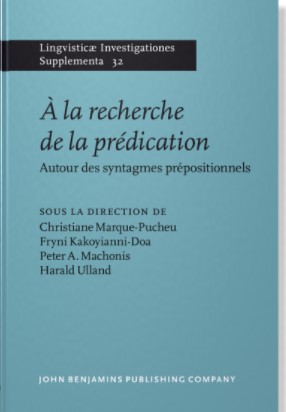
A la recherche de la prédication : autour des syntagmes prépositionnels
Christiane Marque-Pucheu, Fryni Kakoyianni-Doa, Harald Ulland, Peter Machonis
Une thématique commune, le statut prédicatif de certains syntagmes prépositionnels dans différentes langues, fédère les dix études rassemblées dans le présent recueil qui tire son originalité du sujet lui-même. À ce jour, en effet, rares sont les études qui ont abordé la nature prédicative du syntagme prépositionnel. C’est d’autant plus inédit que ces syntagmes sont courants dans des structures comme les phrases à copule. Pour y parvenir, des chercheurs provenant d’horizons théoriques aussi variés que la grammaire de construction, le lexique-grammaire, la grammaire générative, la psychomécanique et la linguistique appliquée, examinent les aspects théoriques de ces syntagmes, sollicitent de vastes corpus ou encore confrontent le français et une autre langue (anglais, grec moderne, grec ancien, russe). De quoi intéresser non seulement la communauté des chercheurs travaillant en linguistique descriptive, mais aussi dans d’autres domaines, qu’il s’agisse de linguistique informatique, de linguistique contrastive ou de typologie des langues.
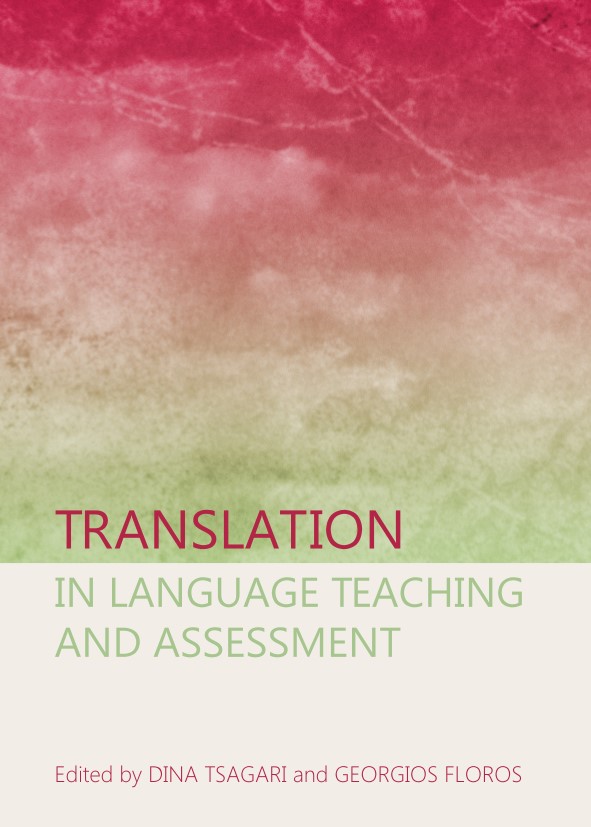
Translation in Language Teaching and Assessment
Dina Tsagari & Georgios Floros
The aim of this volume is to record the resurgent influence of Language Learning in Translation Studies and the various contemporary ways in which translation is used in the fields of Language Teaching and Assessment. It examines the possibilities and limitations of the interplay between the two disciplines in attempting to investigate the degree to which recent calls for reinstating translation in language learning have borne fruit. The volume accommodates high-quality original submissions that address a variety of issues from a theoretical as well as an empirical point of view. The chapters of the volume raise important questions and demonstrate the beginning of a new era of conscious epistemological traffic between the two aforementioned disciplines. The contributors to the volume are academics, researchers and professionals in the fields of Translation Studies and Language Teaching and Assessment from various countries and educational contexts, including the USA, Canada, Taiwan R.O.C., and European countries such as Belgium, Germany, Greece, Slovenia and Sweden, and various professional and instructional settings, such as school sector and graduate, undergraduate and certificate programs. The contributions approach the interplay between the two disciplines from various angles, including functional approaches to translation, contemporary types of translation, and the discursive interaction between teachers and students.

Language Impairment in Multilingual Settings: LITMUS in Action across Europe
Armon-Lotem, Sharon and Kleanthes K. Grohmann (eds.)
COST Action IS0804 “Language Impairment in a Multilingual Society: Linguistic Patterns and the Road to Assessment” aimed to profile bilingual specific language impairment (biSLI) by establishing a network for research on the linguistic and cognitive abilities of bilingual children with SLI across different migrant communities. A battery of tools for Language Impairment Testing in Multilingual Settings (LITMUS) was designed within the Action to achieve these aims, including the Parental Bilingual Questionnaire, the Sentence Repetition Task, the Crosslinguistic Lexical Tasks, the Multilingual Assessment Instrument for Narratives, and two nonword repetition tasks that are not language-specific. The chapters in this volume present research on one or more of the LITMUS tasks in bilingual children with typical language development and on use of the LITMUS testing battery for identifying possible language impairment. The work presented here will be of interest for researchers and clinicians alike, and have profound impact in our understanding of bilingual language development and impairment.
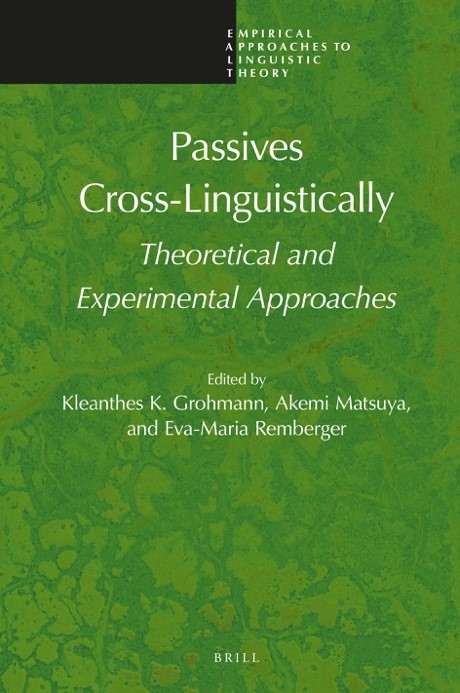
Passives Cross-Linguistically: Theoretical and Experimental Approaches
Grohmann, Kleanthes K., Akemi Matsuya, and Eva-Maria Remberger (eds.)
The chapters collected in the volume Passives Cross-Linguistically provide analyses of passive constructions across different languages and populations from the interface perspectives between syntax, semantics, and pragmatics. The contributions are, in principle, all based on the background of generative grammatical theory. In addition to the theoretical contributions of the first part of this volume, all solidly built on rich empirical bases, some experimental works are presented, which explore passives from a psycholinguistic perspective based on theoretical insights. The languages/language families covered in the contributions include South Asian languages (Odia/Indo-Aryan and Telugu/Dravidian, but also Kharia/Austro-Asiatic), Japanese, Arabic, English, German, Modern Greek, and several modern Romance varieties (Catalan, Romanian, and especially southern Italian dialects) as well as Vedic Sanskrit and Ancient Greek.

Gender, Language and the Periphery
Fabienne Hélène Baider, J. Abbou
This volume aims to demonstrate that the centre/periphery tension allows for a theory of gender understood as a power relationship with implications for a political analysis of language structures, language uses and linguistic resistances. All of the 12 chapters included in this volume work on understudied languages such as Moldovan, Lakota, Cantonese, Bajjika, Croatian, Hebrew, Arabic, Ciluba, Cantonese, Cypriot Greek, Korean, Malaysian, Basque and Belarusian and they all explore from the margins different dimensions of social gender in grammar. The diversity of languages is reflected in the range of theoretical frameworks (linguistic anthropology, systemic functional linguistics, contrastive syntactical analysis to name a few) used by the authors in order to apprehend the fluidity of gender(-ed) language and identity, to highlight the social constraints on daily discourse and to identify discourses that resist gender norms. This book will be highly relevant for students and researchers working on the interface of gender with morpho-syntax, semantics, pragmatics and discourse analysis.

Penser le Lexique-Grammaire : perspectives actuelles
Fryni Kakoyianni-Doa
Le volume Penser le Lexique-Grammaire rassemble les travaux sur le Lexique-Grammaire présentés à Nicosie lors du 30e Colloque international sur le Lexique et la Grammaire organisé par l’Université de Chypre. Ces travaux novateurs, qui portent sur la description formelle des langues ainsi que sur la construction, la gestion et l’utilisation de ressources linguistiques, sont regroupés autour de trois thématiques : les constructions à verbes supports, le traitement automatique des langues, la syntaxe et le discours dans leur contexte pragmatique.
Les articles publiés dans ce volume réaffirment que la confrontation des usages linguistiques avec la réalité permet une description fine des faits de langue et des rapports systématiques qui existent entre les règles de la grammaire et les items lexicaux. Ces contributions montrent enfin que les résultats obtenus, de par leur formalisme, sont utiles au Traitement Automatique des Langues (TAL).
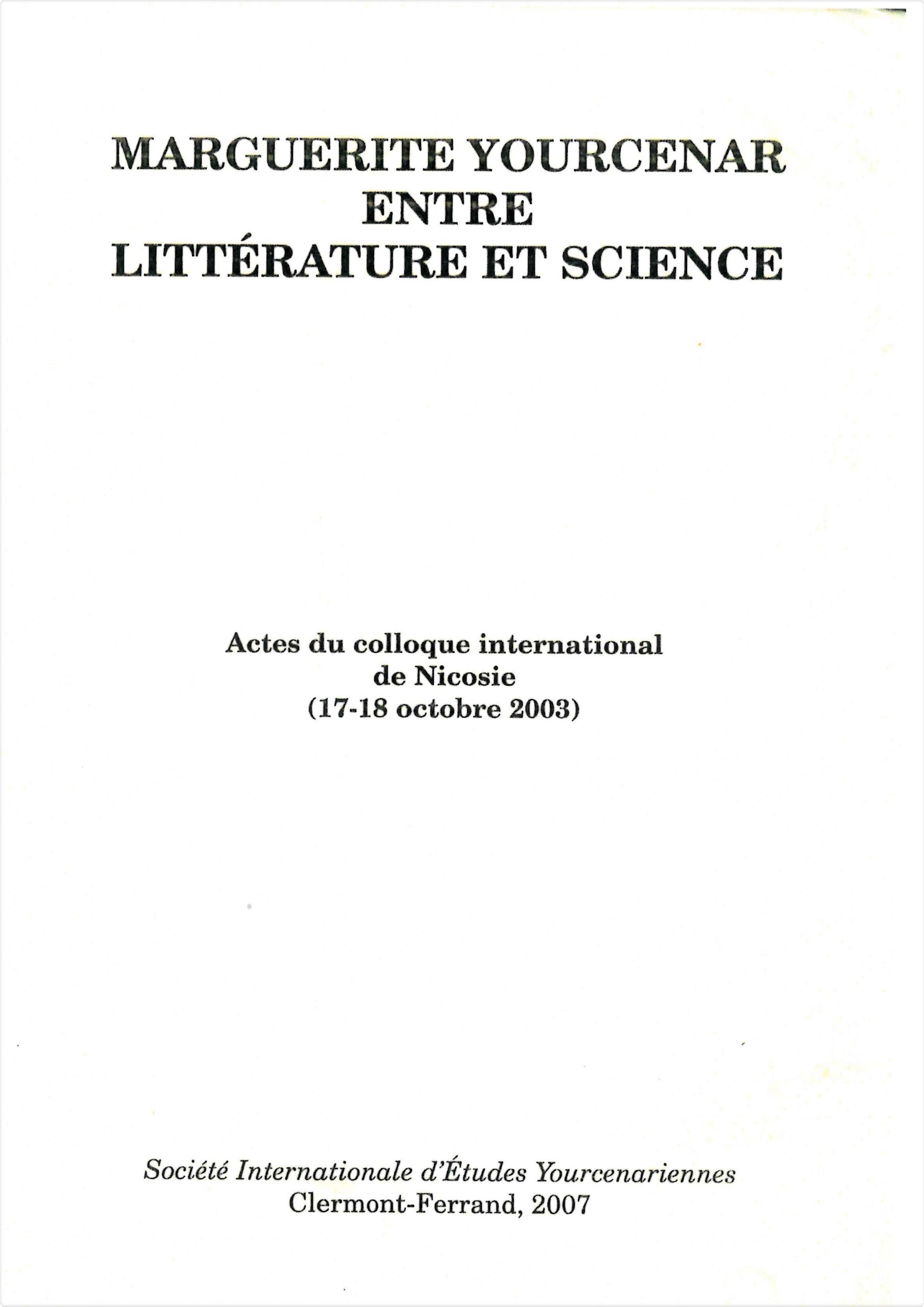
Littérature et sciences, Marguerite Yourcenar
May Chehab, actes du colloque international de Nicosie (17-18 octobre 2003)
Lectrice d'Empédocle, Marguerite Yourcenar n'était pas sans savoir que la science et la littérature n'avaient pas toujours été séparées. Elle n'ignorait pas non plus combien leur opposition ultérieure devait à une construction historique et institutionnelle. Mais prise comme elle l'était dans les « coordonnées de l'ère chrétienne et de l'Europe du xxe siècle » (Souvenirs pieux, p. 707), ère spirituelle et scientifique à la fois, Yourcenar ne peut recevoir cet héritage savant proprement européen issu des physiologues grecs, des travaux de Léonard de Vinci, des penseurs de la Renaissance et des savants des Lumières que de mamere d'abord « séparée ». Ce faisant, tout en émettant des réserves épistémologiques et des réticences philosophiques quant à la validité de la science dans la quête du vrai, elle adhère fermement à l'idée que la science moderne doit être fondée sur le paradigme ternaire suivant: observation, expérience, vérification, avant de pouvoir aboutir à «la prédiction catégorique du calculateur d'éclipses» (Œuvre au noir, p. 657), à la clé de voûte de l'édifice scientifique qu'est la prévision.
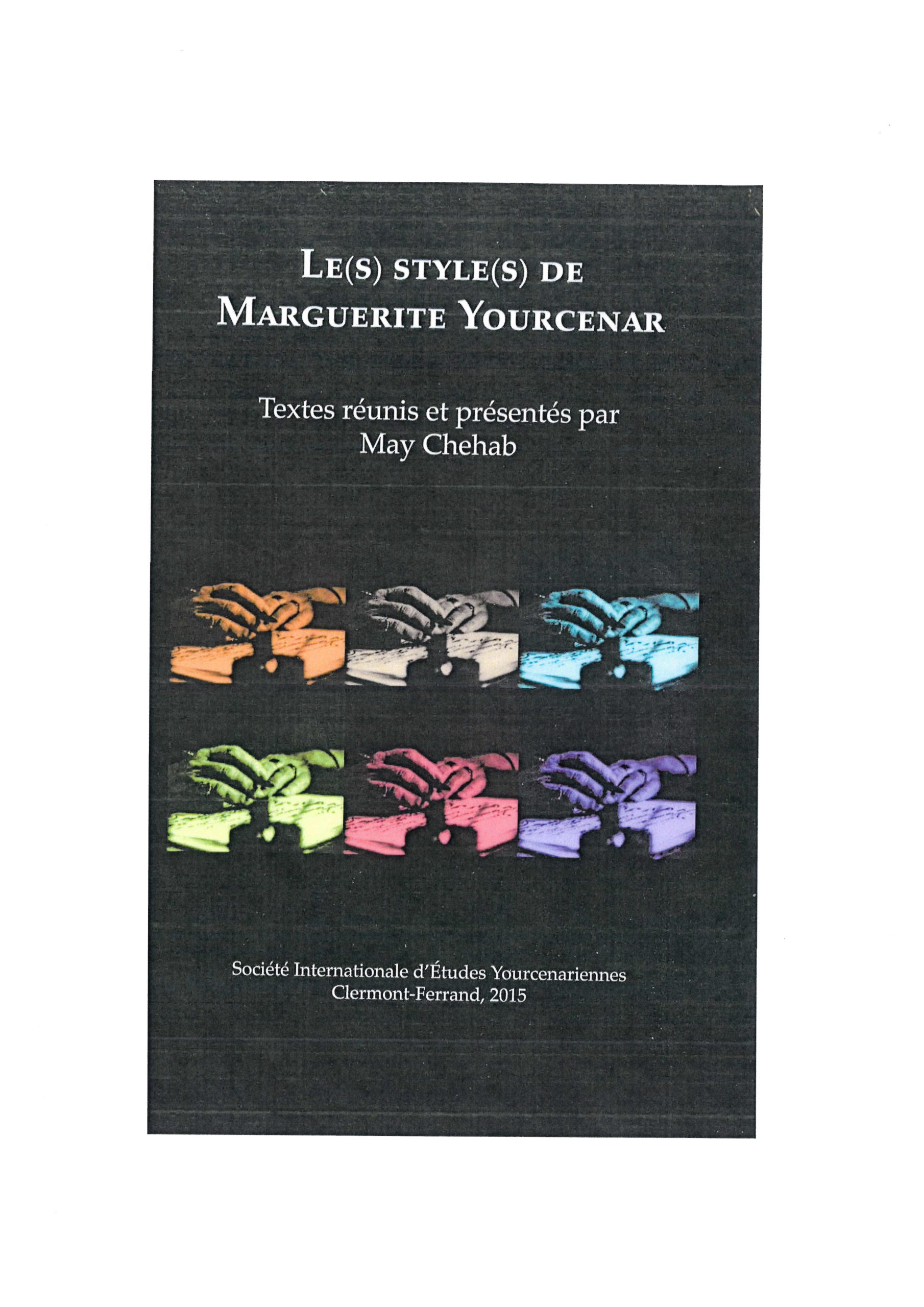
Le(s) styles de Marguerite Yourcenar
Textes réunis et présentés par May Chehab
Par essence, les dictionnaires sont en retard sur la langue dont ils proposent un répertoire. Mais il y a des décalages naturels et des retards autrement plus éloquents. Lorsque par exemple, à l’entrée « style », le Trésor de la Langue Française publié par le CNRS en 16 volumes entre 1971 et 1994 énonce que « Le style [au singulier] est « l’ensemble des moyens d’expression […] qui traduisent […] toute la personnalité d’un auteur », il ne prend guère acte de l’évolution des représentations de l’identité au cours des XIXe et XXe siècles.
Au contraire, et bien que semblant s’en défendre en caractérisant, plus loin dans la même entrée, de sens « vieilli » la notion de style comme « cohésion résultant d’un équilibre ou d’une ordonnance harmonieuse des éléments qui constituent un tout », le Trésor vit encore sur l’erre des conceptions romantiques pour lesquelles le style était l’expression de l’unité et de l’autonomie du Moi. Le Trésor n’est pas le seul à pratiquer le monisme du style, beaucoup s’en faut : si l’on compare les définitions de ce terme dans les dictionnaires contemporains de langue française (le fait se vérifie dans d’autres langues), l’on est frappé par la constance, pour ne pas dire la résistance, du postulat d’unicité identitaire et de complétude formelle que ces définitions reconduisent. Or, plus qu’un postulat, il s’agit là d’un axiome qui a pour lui l’évidence apparemment inébranlable du sens commun : si le style est à la personne ce que la personne est au corps, on ne peut mettre en doute la cohésion et l’unicité du style individuel sans appeler le soupçon sur la monade corporelle de l’humain, sans douter de tout.

Cartographie des émotions
Fabienne Hélène Baider, G. Cislaru
Ce volume étudie les différents liens entre langues et émotions que ce soit dans les commentaires sportifs, les textes classiques ou les films. Les contributions ici réunies proposent une définition et une catégorisation des affects afin de mieux comprendre les enjeux linguistiques et sociolinguistiques de l’expression des émotions.
This volume studies the different links between languages and emotions, whether in sports commentary, classical texts or films. The contributions gathered here propose a definition and categorisation of affects in order to better understand the linguistic and sociolinguistic issues of emotional expression.

Online Hate Speech in the EU
Fabienne Hélène Baider, S. Millar and S. Assimakopoulos
This open access book reports on research carried out as part of the European Union co-funded C.O.N.T.A.C.T. project which targeted hate speech and hate crime across a number of EU member states. It showcases the bearing that discourse analytic research can have on our understanding of this phenomenon that is a growing global cause for concern. Although ‘hate speech’ is often incorporated in legal and policy documents, there is no universally accepted definition, which in itself warrants research into how hatred is both expressed and perceived. The research project synthesises discourse analytic and corpus linguistics techniques and presents its key findings here. The focus is especially on online comments posted in reaction to news items that could trigger discrimination, as well as on the folk perception of online hate speech as revealed through semi-structured interviews with young individuals across the various partner countries.
Tourist Communication. Discursive Approaches to Identity and Otherness
Fabienne Hélène Baider, M. Burger and D. Goutsos
Cet ouvrage traite du rôle du discours dans la communication touristique. Comment le discours impose-t-il des stéréotypes et des idéologies "touristiques"? Comment s'opère en discours la construction de l'identité et de l'altérité? Une douzaine d'auteurs mènent en français et en anglais une réflexion interdisciplinaire sur les jeux et les enjeux de la complexité de la communication touristique. Trois parties : genre, ethnie et culture de la communication touristique, analyse du discours de la communication, approches sémiotiques et multimodales.

Labels and Features in Dictionaries. La Marque en lexicographie. Etats Présents, Voies d’avenir.
Fabienne Hélène Baider, M. Burston and E. Lamprou
La marque lexicographique concerne aussi bien l’aspect sociolinguistique que l’aspect sémantique des mots. Comme le suggère le présent recueil, fruit du colloque international qui a réuni des spécialistes du français et du grec, mais aussi d’autres langues (anglais, tchèque, kaingang, espagnol), ce double emploi soulève de nombreux débats. La première partie, consacrée à la sémantique, traite des descriptions lexicographiques et des problèmes d’équivalences dans les dictionnaires de langue, y compris en ce qui concerne la traduction. La deuxième partie, d’ordre sociolinguistique, examine le marquage diastratique réalisé par arg., fam. et pop. et le marquage diatopique des variétés belge, chypriote, québécoise et suisse du français. De tels classements géolinguistiques sont-ils fondés ? Quel est le statut de la notion de « variante » ? Plus généralement, le marquage du lexique « non conventionnel » répond-il aux réalités linguistiques actuelles ? Comment les valeurs signalées sont-elles marquées, décrites et distribuées dans un dictionnaire électronique ? Des propositions méthodologiques basées sur de nouveaux cadres théoriques sont présentées en fin de volume.
Foreign Language Instructional Technology Conference (FLiT-1): Theory & Practice
Jack Burston, Dina Tsagari, Fryni Kakoyianni-Doa
A collection of papers presented at the First International Conference on Foreign Language Instructional Technology: Theory and Practice, which was held 3-5 December 2010. As its subtitle indicates, theory and practice were the complementary themes of the conference. While the focus in individual presentations may have been more on one than the other, both themes were very evident throughout the conference as demonstrated by the papers in this volume.

Proceedings of the 30th Congress in Functional Linguistic
Fabienne Hélène Baider, M. Karyolemou and M. Katsoyannou
Le présent volume regroupe les contributions présentées lors du 30e Colloque international de linguistique fonctionnelle tenu à Chypre en octobre 2006.La Société internationale de linguistique fonctionnelle – créée en 1976 par André Martinet et ses disciples– a fêté son trentième anniversaire à cette occasion. La rencontre de Chypre a ainsi célébré deux institutions scientifiques fonctionnalistes qui depuis près de quarante maintenant sont des lieux de concertation et de discussion pour tous...

Education for Sustainable Development: Challenges, Strategies, and Practices in a Globalizing World
Anastasia Nikolopoulou, Taisha Abraham, Farid Mirbagheri
This collection provides multiple perspectives regarding the possibility of creating sustainable education practices that are integrated into and relevant to the needs and practices on a global scale. It also focuses on the failure of traditional education to address the problems of globalization. The articles conceive sustainable development education as focusing on the holistic development of the body and mind, encompassing a wide range of issues. This idea is also central to the Gandhian tradition of life knowledge and Nai Talim (New Education). The uniqueness of this compilation is in the multiple perspectives it provides, establishing workable links between local communities, governments, and international organizations that would enable sustainable human development.
Affects, Apprentissage et Enseignement, Langage et l’homme, vol 52.1.
Fabienne Hélène Baider, G. Cislaru and Simon Coffey
This volume gathers original contributions focusing on emotions and learning/ teaching languages.
Handbook of Research on Language Teacher Identity
Sviatlana Karpava
The Handbook of Research on Language Teacher Identity addresses new developments in the field of language education affected by evolving learning environments and the shift from traditional teaching and assessment practices to the digital-age teaching, learning, and assessment. Ideal for industry professionals, administrators, researchers, academicians, scholars, practitioners, instructors, and students, this book aims to raise awareness regarding reflective practice and continuous professional development of educators, collaborative teaching and learning, innovative ways to foster critical (digital) literacy, student-centered instruction and assessment, development of authentic teaching materials and engaging classroom activities, teaching and assessment tools and strategies, cultivation of digital citizenship, and inclusive learning environments.

Handbook of Research on Multilingual and Multicultural Perspectives on Higher Education and Implications for Teaching
Sviatlana Karpava
Multilingualism, multiculturalism, and internationalization in higher education is a contemporary reality worldwide. Because of the importance of multilingualism in learning policy, special professional and education training should be provided both to teachers and students. Multilingual education can promote linguistic and cultural diversity, inclusion, and social development.
The Handbook of Research on Multilingual and Multicultural Perspectives on Higher Education and Implications for Teaching focuses on both top-down and bottom-up perspectives on multilingual and multicultural education based on conceptual and empirical studies. This book provides evidence in support of sustainable multilingualism and multiculturalism in higher education. Covering topics such as dialectic teaching, multilingual classrooms, and teacher education, this major reference work is an essential resource for pre-service teachers, educators of higher education, language policy experts, university administration, scholars, linguists, researchers, and academicians.
Last Updated on March 30, 2026

