
“Diagnosing an Empire: Emperors and Disease in the Chronographia” by StoryPharm fellow James Gilmer.
October 28, 2025
From Body to Code: Medicalisation Between Visual Discourse and Botanical Knowledge
October 30, 2025Figure 1. Lutjan Anthias, creator Th. Lejeune, 1830–1833, National Museum in Krakow. Lithographic engraving on vellum paper. (Source: Look and Learn History Images)
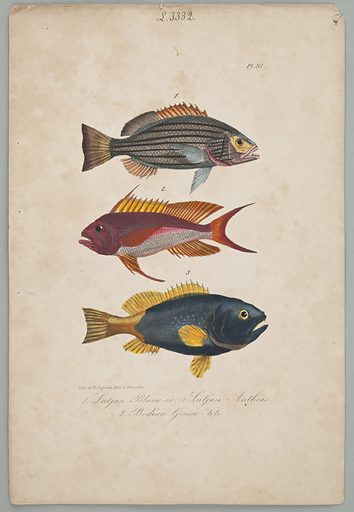
Figure 1. Lutjan Anthias, creator Th. Lejeune, 1830–1833, National Museum in Krakow.
Lithographic engraving on vellum paper.
(Source: Look and Learn History Images)
Polyphonic Remedies: Mind and Body in the Kyranides
StoryPharm Blog 5 (October 2025)
Elena Schoretsaniti
StoryPharm Doctoral Fellow, Lund University
A crucial question in understanding the Kyranides (2nd/4th c. CE), a treatise on medical magic, is how it communicates various forms of authority and efficacy to different audiences. The concept of social languages, as defined by James Paul Gee, refers to distinct varieties of language that allow individuals to express specific socially meaningful identities and to perform roles or activities within specific contexts (Gee 1999: 69). This framework is particularly useful for analysing how the Kyranides employs multiple linguistic registers to negotiate authority across audiences, thereby presenting itself as a multi-voiced therapeutic handbook.
The medical or scientific social language in the Kyranides is characterised by systematic references to the therapeutic properties of natural substances. This voice is essential for the text’s classification as a medical handbook and it is often constructed through its intertextual engagement with earlier medical writings. A characteristic example is Dioscorides’ De Materia Medica, whose presence in the Kyranides imparts a distinctly medical dimension. Specifically, the work of medical magic includes almost verbatim excerpts from Dioscorides, reinforcing the idea that the Kyranides is not limited to metaphysical or magical practices but also integrates elements of scientific knowledge (Kaimakis 1976: IV. 28.14–23; Osbaldeston 2000: 187, II.12). The scientific language of these excerpts is marked by a descriptive style that promotes clarity and the practical application of information. Temporal participles (e.g. τριφθέντες and προσαχθέντες) are frequently employed as linguistic tools to articulate the sequential stages of a recipe or therapeutic procedure. This structure presents the healing process in a manner reminiscent of modern instructional texts, lending these passages a technical and functional character.
The second social language identifiable in the text is the magico-religious register. This language functions performatively, using words, names, and incantations believed to exert real influence over natural and spiritual forces. It includes the invocation of divine or demonic beings, the use of secret or sacred words, and ritualised sequences of speech intended to activate the therapeutic power of substances. The unintelligible language found in certain passages, accessible only to initiated healers, derives from Hebraic and Arabic linguistic traditions (Ogden 2002: 214). It serves to seal the therapeutic process with divine authority (Kaimakis 1976: I.1.142).
The third social language of the text is the popular or practical register, marked by straightforward and actionable instructions. These are often expressed in imperative and concrete terms, such as περίαπτε τῷ τραχήλῳ (‘wear around your neck’; Kaimakis 1976: I.1.158) and other similar phrases. In contrast to the medical or magico-religious registers, the popular register prioritises usability and direct application over theoretical justification or ritual performance.
A fourth social language present in this hermetic text can be described as anecdotal. The Kyranides occasionally incorporates folk tales and narrative episodes that illustrate the application of remedies. These narrative elements serve multiple functions: they enhance the memorability of instructions, making them easier to recall and more accessible to a broader audience; they also have a persuasive function, offering concrete examples that demonstrate the efficacy of treatments. Moreover, they situate healing practices within a wider cultural and moral framework, connecting them to collective knowledge and shared cultural understandings. A representative example is the folk narrative involving Gello, a demonic figure repelled by an apotropaic amulet (Kaimakis 1976: II.31.34–38). The depiction of her dark deeds, such as the drowning of infants, points to her origin in a widely known popular legend. Her presence in the text reflects the fears, beliefs, and hopes of ordinary people in the late antique world.
Ιn my thesis, I aim to explore how magical healers shaped their linguistic and practical knowledge into therapeutic artefacts by invoking the concept of social languages. The diversity of the intended audience is evident: at times, through its vernacular language, the text reached the hands of ordinary individuals, while at others it attracted the attention of literate physicians who occasionally practised methods similar to those described in the Kyranides (Magdalino and Mavroudi 2006: 83–84). A notable example is the early Byzantine medical author Alexander of Tralles, who appears to have been familiar with the treatise and applied therapeutic methods resembling those found in it (Magdalino and Mavroudi 2006: 84).
The polyphonic nature of the text becomes particularly evident in the treatment of mental illness. In the Kyranides, mental disorders are not addressed primarily as medical issues but rather through metaphysical and demonic perspectives, as was generally the case in antiquity (Dickie 2005: 88). The dominant voice here is the magico-religious one, in which secret names and ritual practices attribute a supernatural origin to disturbances of the soul. At the same time, the popular register conveys the concerns of the wider public regarding demonic threats. Thus, healing emerges as closely linked to protection from malevolent forces and to the authority of the practitioner.
In late antiquity, the term ‘sacred disease’ (ἱερὰ νόσος) referred to various disorders of the nervous system. Among the cases described in the Kyranides, the most frequent are epilepsy, demonic possession, and lunacy, often accompanied by mania (Kaimakis 1976: I.24.50; II.41.8). Aretaeus of Cappadocia (2nd c. CE) explained the epithet ‘sacred’ as reflecting the belief that such conditions were caused by demons, necessitating a metaphysical mode of treatment (Kanner 1930: 116), a perspective consistently reflected in the Kyranides. Treatments in such cases involved the preparation of specific amulets; for instance, a ring made from the stone nemesite (νεμεσίτις) combined with the death herb (νεκύα) was believed to cure lunacy (Kaimakis 1976: I.16–23) and, more broadly, to expel demonic influences (Ogden 2005: 268–269). Similar recipes for amulets against epilepsy appear in the Greek Magical Papyri, a fact that invites further investigation (Faraone and Obbink 1997: 117). This is especially significant since the dating of many papyri coincides with that of the Kyranides. A comparative study could therefore illuminate contemporary conceptions of the ‘sacred disease’ and whether a coherent line of thought existed regarding its treatment. In the Kyranides, madness is addressed through symbols, amulets, herbs, and ritual practices. It is integrated into a cosmological and spiritual framework rather than separated from other diseases, and those affected are not marginalised. This reflects the perceptions of contemporaries and underscores the need for a more comprehensive study of the treatise and other similar texts.
Within the multiplicity of discourses in the Kyranides, where metaphysical and medical therapies converge, cosmetic recipes also appear. These add an aesthetic dimension that is fully embedded in its cosmological vision, understood as the integrated framework of natural, supernatural, and therapeutic knowledge. One notable condition related to physical appearance is alopecia, which is frequently mentioned in the recipes of the Kyranides. These treatments are usually pharmaceutical rather than magical (Kaimakis 1976: II.18.5–8; IV.55.5–7). Very similar recipes for alopecia appear in Galen’s De Compositione Medicamentorum Secundum Locos (Kühn 1821–1833: I.12.383), reinforcing the scientific dimension of the Kyranides’ cosmetic section. Another head condition associated with cosmetic treatment is dandruff, for which a lotion is recommended (Kühn 1821–1833: II.39.6). Further examples include a mixture of the bile of the fish anthias (ἀνθίας) with honey to remove facial blemishes and brighten the complexion (Kaimakis 1976: IV.2.1–3). There is even a suggestion to use a specific kind of Indian wood (ξυλάλοχον) which has a very aromatic scent and contributes to a more pleasant mouth scent (Kaimakis 1976: V.14.1–3). One more pharmaceutical product found in the treatise, which appears to be primarily antiseptic, is a soap made from sheep fat blended with the fig tree ash, which could also serve cosmetic purposes (Kaimakis 1976: II.33.5–7). To some extent, cosmetology in the Kyranides concerns physical appearance and demonstrates that the pharmaceutical aspect often functions independently of magical practices. Superficial conditions, such as facial blemishes or hair loss, are generally treated with pharmaceutical recipes. This suggests that magic, as a form of remedy, is not always present in the treatise. However, when the nature of the ailment is internal or obscure, a more magical and esoteric approach is employed.
In conclusion, the Kyranides may be read as a speaking text of therapeutic magic, in which language and voice play an active role in the healing process. The title Kyranides, feminine and plural may – if derived from koiranos (king) – be interpreted as queens (Kaimakis 1976: I.1–5). This reading suggests an alternating and multifaceted succession of authoritative voices within the text. According to the nature of each illness, an appropriate remedy – and thus an appropriate voice – is required. During its preparation, the proper voice each time ‘reigns’, determining the therapeutic act itself. This polyphony not only defines the relationship between healer and patient but also shapes the identity of contemporary audiences. Consequently, the exploration of mental health and cosmetology within the work offers a promising point of departure for tracing the multifaceted identities that constitute the body of the treatise.
References
Dickie, M. W. 2005. Magic and Magicians in the Greco-Roman World. London: Routledge
Faraone, C. A. and D. Obbink (eds) 1997. Magica Hiera: Ancient Greek Magic and Religion. Oxford and New York: Oxford University Press
Gee, J. P. 1999. An Introduction to Discourse Analysis: Theory and Method. London: Routledge
Kaimakis, D. (ed.) 1976. Die Kyraniden. Meisenheim am Glan: Hain
Kanner, L. 1930. ‘The Names of the Falling Sickness: An Introduction to the Study of the Folklore and Cultural History of Epilepsy’, Human Biology 2.1, 109–127.
Kühn, K. (ed.) 1821–1833. Galen, De compositione medicamentorum secundum locos. Leipzig: Car Cnoblochii
Magdalino, P. and M. Mavroudi (eds) 2006. The Occult Sciences in Byzantium. Geneva: La Pomme d’ Or
Ogden, D. 2002. Magic, Witchcraft, and Ghosts in the Greek and Roman Worlds: A Sourcebook. Oxford: Oxford University Press
Ogden, D. 2005. Greek and Roman Necromancy. Princeton, NJ: Princeton University Press
Osbaldeston, T. A. (trans.) 2000. Dioscorides De Materia Medica: Being an Herbal with Many Other Medicinal Materials. Johannesburg: Ibidis Press


StoryPharm has received funding from Horizon Europe Programme for Research and Innovation under the action Horizon MSCA Doctoral Networks, Grant Agreement No. 101169114 and the UK Research and Innovation with Grant Ref: EP/Z534523/1

Anna Komnene’s Alexiad (12th-century manuscript). Biblioteca Medicea Laurenziana, Florence. View source
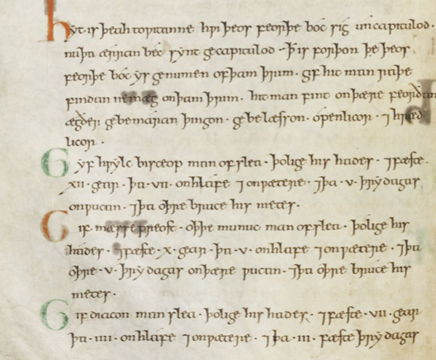
Figure 1: Cambridge, Corpus Christi College, MS 190 (Penitential of Theodore), ca. 1000–1099
A penitential manuscript from Exeter (UK) that classifies sexual transgressions under normative categories and assigns penances according to repetition and severity.
Image courtesy of the Parker Library, Corpus Christi College, Cambridge (CC BY-NC 4.0).

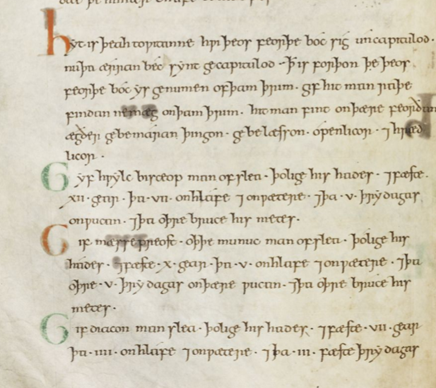

Figure 1: Illustration of a Pharmacy in the Italian Tacuinum sanitatis, 14th century by "Magister Faragius" (Ferraguth) of Naples – book scan of Tacuinum Sanitatis https://commons.wikimedia.org/w/index.php?curid=1638852