
StoryPharm at IMC Leeds 2025!
July 4, 2025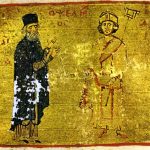
Psellos and Friends: Discourse Analysis and Byzantium
August 30, 2025
Treatise on Herbs (Tractatus de herbis, 13th/14th c. Italy) Egerton 747 (f. 12r), British Library, London
What is a Pharmakon?
StoryPharm Blog 2 (July 2025)
- Sofia Bazzoni
- Vasiliki Bougatsou
- Christopher Ian Lillington-Martin
- Marius Massucco
- Elena Schoretsaniti
StoryPharm Doctoral Fellows
Given the multiplicity of meanings that the word ‘pharmaka’ (the plural form of pharmakon / φάρμακον) can assume, often not entirely positive, it is useful to list the most relevant ones here: drug, healing remedy, medicine, enchanted potion, philtre, spell, incantation, poison, lye for laundry, cure, oil applied to wrestlers, dye, paint, color, and chemical reagent used by tanners.
The first thing one notices is that the term ‘pharmakon’ challenges Western thought, which has always been based on hierarchical oppositions (good/evil, sacred/profane, natural/supernatural, right/wrong, healthy/sick). It is a term that shifts depending on context, dosage/composition, and use.
Why is dosage so influential in defining this word?
Reflecting on this question, we noticed that dosage is a daily concern: in cooking, in gardening, in pharmacy, and in medicine, if an anesthesiologist miscalculates the dosage, there are serious consequences for the patient’s health. A proper dosage, therefore, ensures the success of the pharmakon, one simply needs to trust it. Trust becomes central in the doctor, patient relationship, just as it is between penitent and confessor. In Christianity, medical prescriptions become the ‘act of contrition’ after the sacrament of confession; caring for the sick becomes an act of expiation for sin.
From that point on, we tried to think of pharmaka as something that goes beyond the purely medical dimension. We began to identify how, starting from late antiquity, various places, objects, words, and natural elements could be understood as pharmaka.
Starting from a bibliographic search, we came across Jacques Derrida’s essay Plato’s Pharmacy (1968), in which the philosopher, through Plato’s Phaedrus, explains how writing itself must be considered a pharmakon. For many, writing is a form of healing, it engages different parts of the body, contains traumas, thoughts, and imagination, and involves various interlocutors. Words are a pharmakon that are consciously and voluntarily administered and received within a relationship of trust between writer and reader.
In the early Middle Ages, it was believed that formulas engraved on stones or amulets increased their healing power against malevolent forces, consider, for instance, the lamellae (metal sheets) found in France and England in the sixth century. The object thus becomes both pharmakon for the sufferer and narrator of its own time.
Regarding storytelling as a pharmakon, Lucia Galvagni aptly stated in her presentation: ‘the time of communication has become the time of care’. If we apply this idea to late antiquity, the Kyranides and herbals become the first mediating instruments between sufferers and healers. The Kyranides exemplify the exact interrelation of natural cures, incantations, and symbolic objects such as amulets. Here, ‘magic’ is not the direct antagonist of medicine in the modern sense, but becomes pharmakon itself. These texts, in late antiquity, served as the theoretical foundation for medicinal recipes used by both folk and professional healers, making ‘medicine’ more accessible to the public.
We live in a society where medical therapies are not accessible to everyone; the costs of research and pharmaceutical production are rising, further widening the social gap. Will there come a time when we once again place our trust in symbolic objects or incantations? Or is this perhaps why there’s renewed interest in naturopathy and herbal medicine?
For many centuries, human health was closely associated with healing through plants. It’s worth recalling that Saint Benedict, in his Rule, required monasteries to maintain gardens of medicinal herbs. In the Christian era, herbs were true pharmaka, since the plants themselves, just like human beings, were divine creations, and as such, became the instruments through which God healed His devotees. Herbals thus became a treasure chest of knowledge, not always secret, as seen in the Codex Vidobonensis 93, which underwent glossing over time in step with developments in medical knowledge. They bear witness to humanity’s desire to cling to life through the most accessible pharmakon: nature. This raises a natural question: in the medieval period, was herbal knowledge so widespread that visual representation became superfluous? Is that why some herbals were unillustrated?
Still within an interdisciplinary approach, and reflecting on ‘alternative’ medical practices, one less obvious example of pharmaka is sacred spaces and buildings. It is not the place itself that acts as a pharmakon, but rather the agents operating within it: the clergy, for instance, selected saints to whom churches were dedicated destinations for pilgrims seeking blessings, or better yet, a pharmakon. Doesn’t this resemble the tourist today who tosses a coin into the Trevi Fountain in hopes of luck?
Just as medieval clergy had to reckon with the healing needs and practices of pilgrims (cf. Augustine, St. Heid), today’s medical authorities could benefit from historical-artistic studies to reconsider the meaning of ‘therapy’, considering the needs of patients on their own ‘pilgrimage’ through the hospital, and their narratives.
In this context, as a group, we aim to investigate the specific indicators that make a pharmakon worthy of trust. We do not intend to evaluate its ‘medical efficacy’ as a mere material object, but rather feel the need to define its narrative and social functions. Starting from late antiquity, we trace the trajectory of pharmaceutical agency to better understand its crucial role in shaping human relationships. In doing so, we hope to contribute to the definition of more solid ethical foundations that could gradually foster a more humanistic healthcare environment.
We believe that the interdisciplinary nature of our projects is a strength to be embraced. Our diversity of methods, stemming from varied academic backgrounds (classics, philology, art history, and archaeology), will help us share tools of investigation that allow us to explore a wide range of pharmaka, from words to images and monuments. While we all share a common interest in the narrative dimension, this diversity of approaches will allow us to shed light on current issues in the therapeutic system by rooting our research in past experiences. Through different pharmaka, such as manuscripts (dissemination, combination of images and texts, and rewriting), objects (from crafting to ritual use), and places (from travels to stays), we will attempt to define a form of storytelling-therapy and explore how healing always involves a shared, collective experience.


StoryPharm has received funding from Horizon Europe Programme for Research and Innovation under the action Horizon MSCA Doctoral Networks, Grant Agreement No. 101169114 and the UK Research and Innovation with Grant Ref: EP/Z534523/1

Anna Komnene’s Alexiad (12th-century manuscript). Biblioteca Medicea Laurenziana, Florence. View source
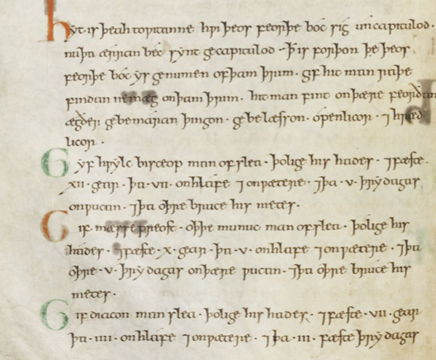
Figure 1: Cambridge, Corpus Christi College, MS 190 (Penitential of Theodore), ca. 1000–1099
A penitential manuscript from Exeter (UK) that classifies sexual transgressions under normative categories and assigns penances according to repetition and severity.
Image courtesy of the Parker Library, Corpus Christi College, Cambridge (CC BY-NC 4.0).

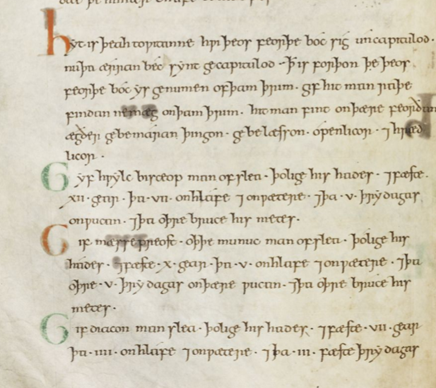

Figure 1: Illustration of a Pharmacy in the Italian Tacuinum sanitatis, 14th century by "Magister Faragius" (Ferraguth) of Naples – book scan of Tacuinum Sanitatis https://commons.wikimedia.org/w/index.php?curid=1638852